
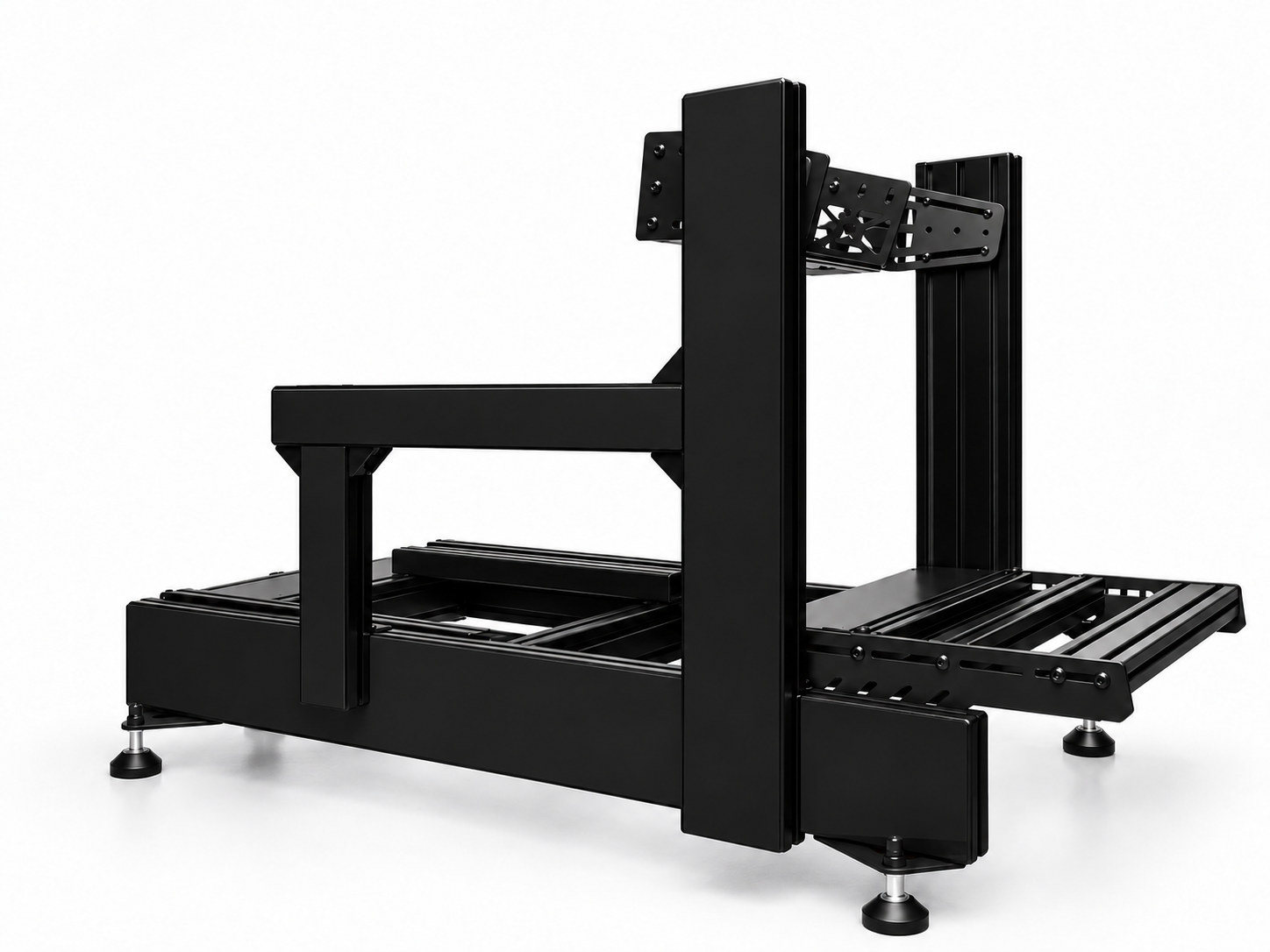

Motion is one of the biggest “wow” upgrades in sim racing — but it’s also one of the easiest to overcomplicate. You don’t just bolt actuators to any frame and hope for the best. You need a rigid cockpit, clean mounting points, smart cable routing, and software that plays nicely with your sim stack.
That’s why we’re excited to share a new collaboration: Novus motion platforms are now available via SimXPro. If you’ve been thinking about adding motion to your rig, this is the cleanest way we know to do it without turning your build into a science project.
What a motion platform actually adds (beyond “immersion”)
When motion is set up properly, it’s not just about feeling bumps. It can help you drive more consistently because your body gets extra cues for:
- Brake release (weight transfer and pitch)
- Rear traction and rotation (yaw + traction loss sensation)
- Kerb strikes and road texture (high-frequency detail)
- Load build-up through longer corners (sustained forces)
In other words: motion can be a training tool — especially for drivers chasing repeatability in endurance stints.
Why Novus (and why now)
Novus’ approach matches what we care about: rigidity, repeatability, and integration. Their motion system is built around precision CNC-machined aluminium actuators and a dedicated motion controller, and it’s designed to integrate neatly with extruded aluminium cockpits.
On the software side, the Novus system is designed to work with Sim Racing Studio, which keeps setup and tuning straightforward for both new and experienced motion users.
Shop the Novus Motion System here: Novus Motion System
Motion-ready cockpit checklist
If you’re planning a motion build, we strongly recommend you start with the foundation. Here’s what matters most:
- Rig stiffness: motion exaggerates any flex that already exists.
- Stable seating: if your seat flexes, your feedback becomes “mushy.”
- Mass management: keep unnecessary weight off moving parts where possible.
- Monitor strategy: many motion users prefer a freestanding monitor stand to keep screens perfectly aligned and reduce moving mass.
Recommended SimXPro foundations for motion
Motion is where “buy once, cry once” starts to make sense — because upgrading the rig later usually means rebuilding everything.
- Closed-profile GT build: SimXPro GT‑PRO
- Maximum rigidity platform: SimXPro XT120 (or XT160 for the no-compromise route)
- Seat options for long stints: Torq GT or Olix GP
- Monitor stands: View all Monitor Stands (check the HEAVY options for larger screens)
Questions? We’ll help you plan it.
If you’re unsure whether motion makes sense for your space, your hardware, or your goals, reach out. A well-built motion rig can be incredible — and a poorly planned one can be frustrating. We’d rather help you get it right the first time.
Related reading
- Ecosystem Compatibility Update: Standard Mounting Patterns, Smarter Upgrade Paths
- Aluminium Profile vs Tubular Sim Rigs: Which Should You Choose?
- Behind the Seat: Composite Shells, Cushions and Mounting Tips
- Sim Racing Guides Are Live: A Knowledge Hub for Beginners and Builders
Related guides
- Ben Daly joins SimXPro as an official ambassador
- R_Messaoud joins SimXPro as an official ambassador
- Getting started in sim racing: Choose your first wheel, pedals and cockpit
- Aluminium profile vs tubular sim rigs: Which should you choose?
- Best sim racing cockpit for motion platform
- Tactile transducers vs motion platform which to buy first
- AXSIM vs PT Actuator
- D-BOX vs PT Actuator
- IMSIM vs PT Actuator
- AXSIM vs D-BOX motion

Share:
THOMB joins SimXPro as an official ambassador
Introducing the SimXPro prodigy program: Your path from sim to track