

Most sim racers upgrade wheelbases and pedals first. But if your seating position is unstable or uncomfortable, those upgrades won’t translate into consistent lap times.
That’s why we take seat engineering seriously — especially with our new seats:
Why composite shell rigidity matters
When you hit a stiff brake pedal, your body tries to slide forward. If the seat flexes, your hips move. If your hips move, your braking pressure changes.
Both Torq GT and Olix GP are designed around rigid composite shells rated to 300 kg max load. The goal is simple: stability you can feel.
Cushions: comfort is a performance feature
Comfort isn’t about “soft”. It’s about support in the right places so your body relaxes and your hands and feet stay precise.
Olix GP uses fire-retardant PU cushions and includes heat-management materials to help with long sessions. Torq GT focuses on a supportive GT posture that works across many disciplines.
Mounting: the most overlooked part of a seat purchase
Seats are only half the story. The mounting solution decides:
- Your seat height (and therefore wheel height)
- Your hip-to-pedal relationship (brake consistency)
- Your ability to share a rig with others (slider vs fixed)
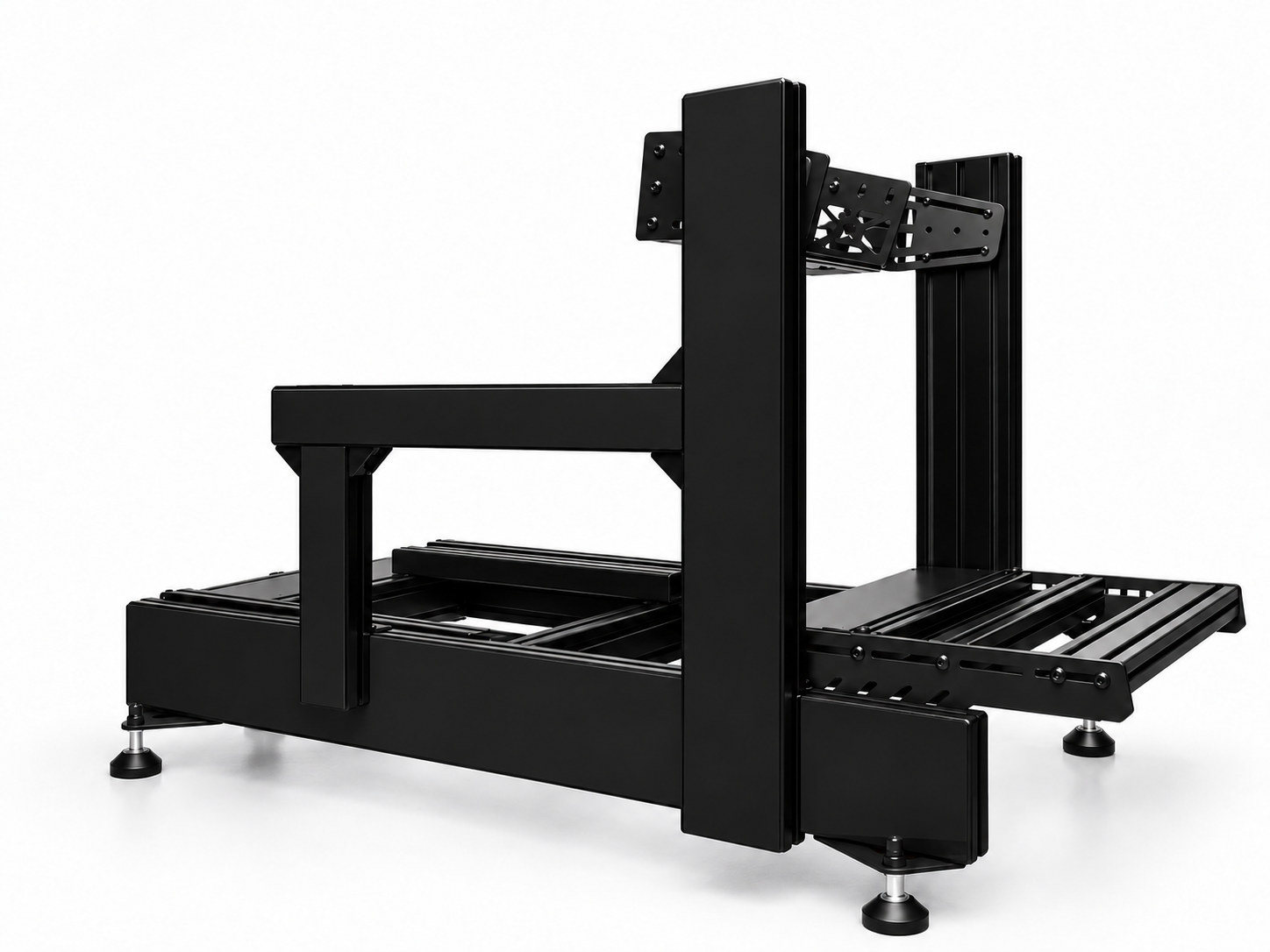
Remember: seat mounts are not included with seats. Add one of these:
5-minute seat setup checklist
- Lock the seat first (side mounts tight, no play).
- Set pedal distance so you can brake hard without stretching your toes.
- Set wheel distance so your elbows are slightly bent at full lock.
- Check knee angle: no knee strain after 20 minutes.
- Align the monitor so you’re not turning your neck mid-corner.
Continue reading
- Torq GT vs Olix GP: which one should you buy?
- How to choose your first sim racing seat
- Seat sliders vs fixed mount vs side mount brackets

Share:
Ecosystem compatibility update: Standard mounting patterns, smarter upgrade paths
SimXPro x alpine at masters expo 2025: Bringing sim racing to rai amsterdam