
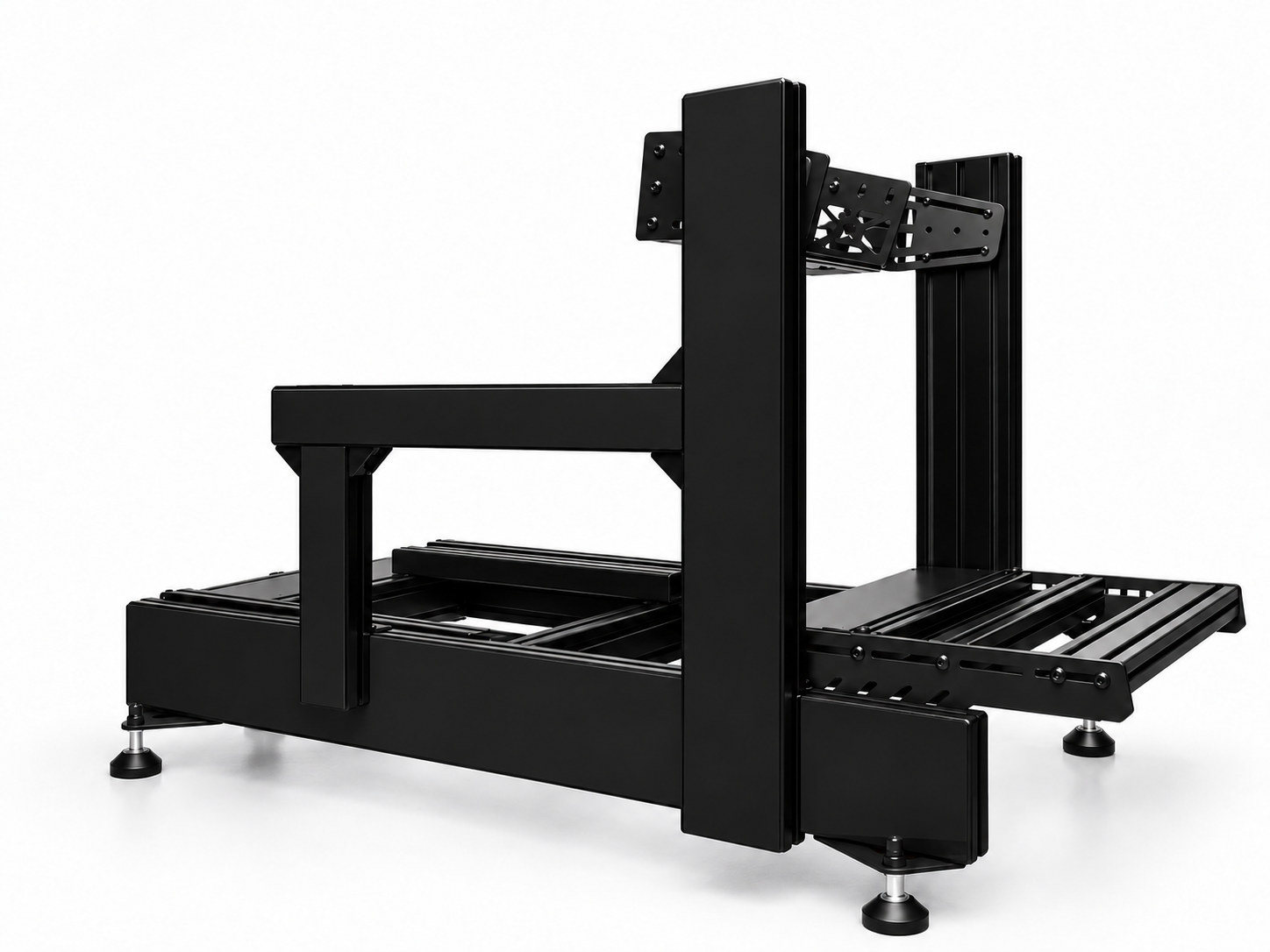

Sim racing is one of the few hobbies where “entry level” can still be genuinely thrilling. A modest wheel and pedal set can give you the feeling of trail braking into a corner, catching a slide, and nailing a lap after lap.
But there’s a problem every beginner runs into: there are too many options. Gear-driven or belt? Direct Drive? Load cell? What cockpit do you actually need?
Let’s simplify it. This guide walks you through choosing your first wheel, pedals and cockpit with compatibility tips and a sensible upgrade path that won’t waste your money.
Step 1: decide what you want from sim racing
Before you buy anything, answer one question: what kind of sim racer are you?
- Casual / fun: you want immersion and close racing, without chasing tenths every night.
- Competitive: you care about consistency, braking accuracy, and repeatable performance.
- Training / technique: you want to build real driving skills—smooth inputs, vision, and discipline.
Your answer influences where your budget goes. If you’re leaning “competitive”, pedals and cockpit stability matter sooner than the fanciest steering wheel.
Step 2: choose your first wheelbase and wheel
Wheelbases fall into three broad categories. Each is “right” for a different stage of the hobby.
Tier 1: gear/belt-driven wheels (starter-friendly)
This is the classic first step: a complete wheel + pedals bundle that clamps to a desk. It’s the lowest-risk way to learn whether you love sim racing and it’s easy to resell if you move on.
Who it’s for: anyone who wants to start quickly, keep cost sensible, and build basic skills.
Tier 2: entry Direct Drive (the “serious” starting point)
Direct Drive wheelbases connect the steering wheel directly to the motor shaft. The feedback is cleaner, faster, and more detailed especially in braking zones and on kerbs.
Who it’s for: beginners who already know they’re committed, or anyone upgrading from a starter wheel.
Important: Direct Drive also increases the demands on your cockpit. If the wheelbase is strong and your rig flexes, you’ll feel it immediately.
Tier 3: high-end Direct Drive (when detail matters)
At the top end you’re paying for refinement: smoother torque delivery, better thermal performance, stronger ecosystems, and more detail through the wheel.
Who it’s for: dedicated racers, endurance sim drivers, and anyone chasing ultimate feel.
Step 3: choose pedals with your future self in mind
If you only remember one thing from this guide, make it this: pedals shape your lap time more than your wheel.
Why? Because braking is where consistency lives. If you can hit the same brake pressure every time, your lap time stabilises and then you can push.
Potentiometer vs load cell (in plain English)
- Potentiometer pedals measure travel (how far you press). Good for starting out, but harder to be consistent when you brake hard.
- Load cell pedals measure force (how hard you press). That’s closer to how real brakes feel, and it’s easier to build muscle memory.
Load cell braking is a major upgrade but it comes with a requirement: your pedals need a solid mounting solution. If the pedal plate moves, your consistency disappears.
Step 4: choose the cockpit that matches your hardware
There are three common mounting stages for sim racing. Many people progress through them, but you don’t have to follow the same path.
Stage A: desk clamp + chair
Perfectly valid for starting. The main challenge is stability: your chair moves, your pedals slide, and your body position changes every session.
Stage B: wheel stand
A wheel stand improves rigidity and pedal stability without taking up the space of a full cockpit. It’s a smart step if you’re short on space or you need portability.
Stage C: full cockpit (the foundation)
This is where everything clicks. A proper cockpit locks your seating position, pedal distance, and wheel alignment. That makes your inputs more repeatable and repeatable inputs are how you become faster.
You’ll often hear a simple upgrade order repeated in sim racing communities: rig → pedals → wheel. It’s not a rule, but it’s a good guideline if consistency is your goal.
Compatibility checklist: avoid the “it doesn’t fit” moment
Most modern sim hardware is designed to be compatible, but there are still gotchas.
Before you buy, check these five areas:
1) Wheelbase mounting style
Some wheelbases mount from the bottom, some from the sides, and many Direct Drive bases offer a front-mount option. Make sure your cockpit supports the mount you plan to use, or offers an adapter plate.
2) Pedal mounting holes and angle adjustment
Pedals typically mount with bolts through the base. Look for a pedal deck that supports multiple hole patterns and offers angle adjustment especially if you plan to run load cell/hydraulic brakes.
3) Seat rails and brackets
Bucket seats often use side mounts, while reclining seats usually use bottom rails. Confirm what your seat needs, and whether the cockpit includes the necessary brackets or sliders.
4) Monitor mounting (VESA)
Monitors use VESA bolt patterns (commonly 75×75 or 100×100, with some larger screens using 200×200). Check what your monitor supports, and what your stand/mount supports especially if you plan triples.
5) Ecosystems and upgrade path
Some brands lock you into their wheel ecosystem (wheels, quick releases, hubs). That’s not bad it just means you should plan your upgrades so you don’t pay twice.
First setup tips: comfort is performance
A good seating position is not just “nice to have”. It reduces fatigue, improves control, and helps you drive longer without losing precision.
Start with these three basics
- Seat distance: with the brake fully pressed, your knee should still have a slight bend never locked straight.
- Wheel height and reach: your shoulders should stay relaxed, with a gentle bend in your elbows at your normal steering position.
- Pedal angle: set it so your ankle can move smoothly without straining your shin. Small changes make a big difference over long sessions.
If you’re using a monitor (single or triples), bring it as close as practical and align it with your eye line. Field of view is a deep topic, but the simple goal is: the screen should feel like a window, not a TV across the room.
Example upgrade paths (without rebuilding everything)
You don’t need to buy a €5,000 setup on day one. A smart plan is to build in stages so each upgrade adds value instead of forcing you to replace everything.
Path 1: the sensible starter → solid cockpit
- Start with an affordable wheel + pedals set to learn the basics.
- When you’re hooked, move to a rigid cockpit so your position is fixed.
- Upgrade pedals to load cell when you want consistency under braking.
- Move to Direct Drive when you want better detail and control.
Path 2: committed beginner → Direct Drive early (done right)
- Start with an entry Direct Drive wheelbase.
- Pair it with a cockpit that can handle torque and braking forces.
- Add load cell pedals once your mounting is stable.
- Then refine: wheels, shifters, handbrakes, screens and ergonomics.
Reference builds with SimXPro chassis, seats and monitor stands
If you want a practical reference for how a modular ecosystem can look, here are three example directions:
Entry aluminium profile cockpit
R80 GT Sim Racing Cockpit is designed as a stable starting point with upgrade potential ideal if you want the benefits of aluminium profile without going straight to a flagship rig.
High-end GT cockpit with an upgrade-first mindset
GT - RS GT Sim Racing Cockpit is built around premium-grade aluminium profiles and hardened steel brackets, with an ecosystem designed to stay compatible as your setup evolves.
Maximum strength for serious hardware
XT120 GT Sim Racing Cockpit targets full adjustability and rigidity, and comes standard with a universal front wheel mount, an extended 58 cm shifter mount, and a universal profile pedal deck.
Monitors: single vs triples
If you want integrated mounting (clean and compact):
- GT - RS Single monitor mount – designed for the GT-RS, with tilt/slide adjustment and height positioning.
- GT - RS Triple monitor mount – designed for the GT-RS, for stable triple alignment.
If you want a freestanding solution (great for isolating vibration):
- HEAVY Triple screen setup VESA 100 - 200 – reinforced triple-screen stand with VESA options.
- Single screen stand tiltable - VESA 100/200 – adjustable single stand with tilt and VESA support.
Seats: comfort, stability and driving style
Seat choice affects posture, fatigue and control. GT-style seating is more upright; formula-style is lower and more reclined. Pick the style that matches the cars you drive most.
- Torq GT – GT-style seat aimed at stability and endurance sessions.
- Olix GP – formula-style seat with a patented non-flexing shell (rated up to 300 kg of force).
Final thought
Start with what you can afford and what fits your space. The key is not buying “perfect” it’s buying smart so you can upgrade without regrets.
Build a stable foundation, get your seating position right, and focus on smooth, consistent driving. The speed comes after.
Drive your dream, one upgrade at a time.
Related guides
- Aluminium profile vs tubular sim rigs: Which should you choose?
- Sim racing for console vs pc: What changes, what doesn’t, and what to buy
- Sim racing wheelbase mounting patterns: How to check fitment before you buy a rig
- Best sim racing cockpit for Direct Drive: A rigidity checklist that prevents flex

Share:
From racing games to real track confidence: Skills to practice (and the rig that supports it)
Haptic seat pads (hf8 etc): Worth it or better put into a rig?