
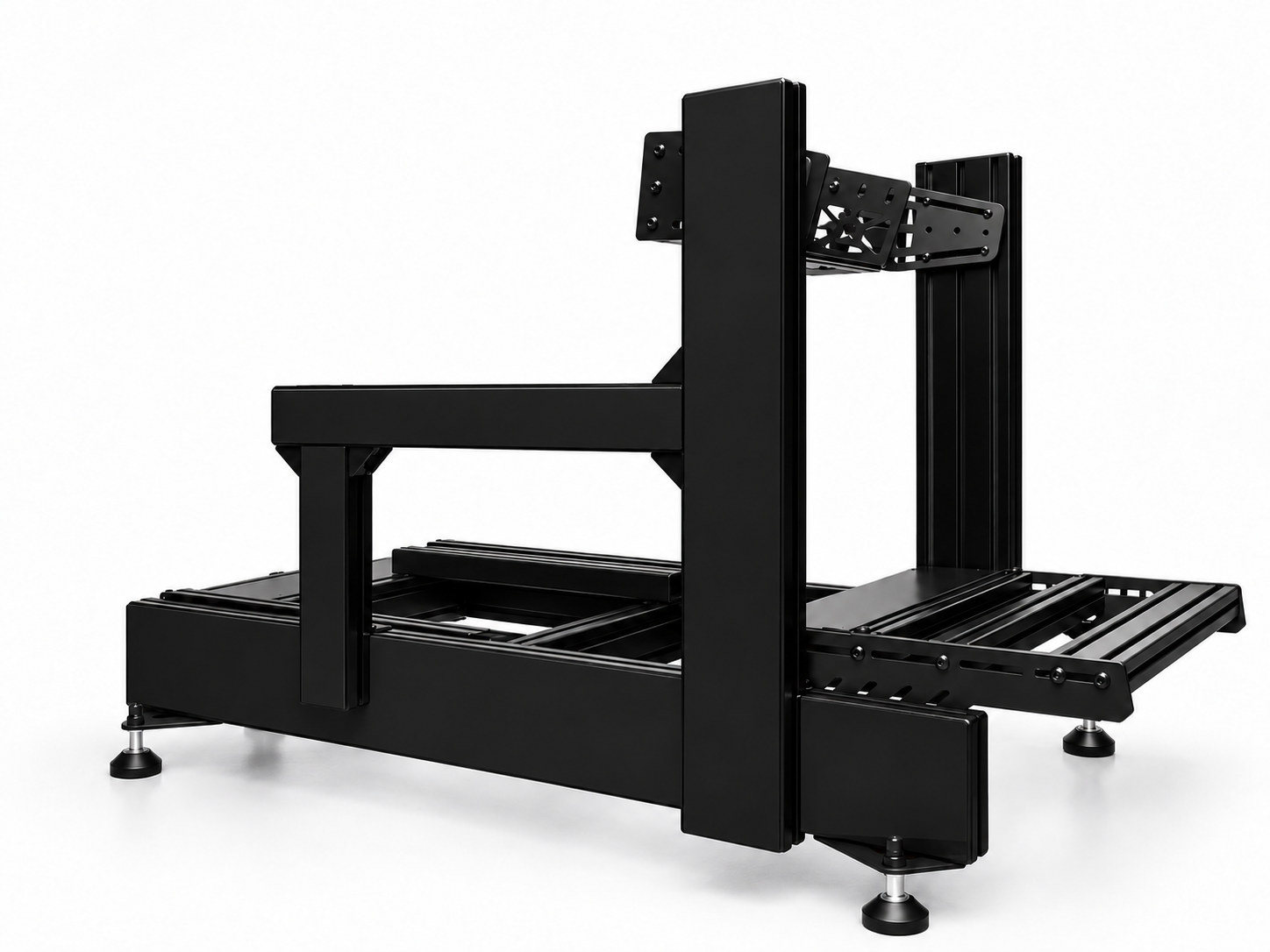

A great pedal set on a flexy mount is wasted potential. Stiff brakes need a stiff foundation. This guide compares common pedal mounting approaches and explains when a universal pedal plate is enough — and when a profile-based pedal deck makes more sense.
Rule of thumb: buy the rig you can grow into. A cockpit that stays rigid saves money (and frustration) when you upgrade later.
A great rig is the one you stop noticing — because nothing flexes, nothing rattles, and your position stays the same every session.
Key takeaways
- If your brake feel changes lap to lap, check flex before settings.
- Pedal angle and heel support are part of braking performance.
- A cockpit isn’t just a frame — it’s the foundation of feel.
- Rig choice determines how far you can upgrade later.
- Small adjustability details matter more than they sound.
- Stiffness and ergonomics are the real performance features.
The real difference
If your cockpit doesn’t move, your learning accelerates. The car feels more consistent, your braking becomes repeatable, and you can focus on technique instead of hardware quirks.
Fitment checklist
- How stiff is your brake (load cell vs hydraulic, and how hard you press)?
- Do you need fine angle adjustment for comfort and ankle position?
- Monitor mounting approach (integrated vs freestanding).
- Accessory mounts: shifter, handbrake, button box, trays.
- Wheelbase mounting options (bottom / side / front).
- Pedal deck stiffness and adjustability for load cell/hydraulic sets.
- Seat mounting range for different driver heights.
Build plan
- Remove flex first, then tune pedal stiffness and curves.
- Mark your pedal positions so you can return after changes.
- Set seat position and pedal distance first.
- Add wheelbase and lock in steering height/tilt.
- Finish with displays, cable management and peripherals.
- Plan your final ‘endgame’ hardware, then work backwards.
Notes for upgrades
Plan your cockpit around how you drive. A few smart choices (monitor strategy, pedal mounting, accessory positions) can save you hours of rebuilding later.
Relevant SimXPro options
- Profile Pedal Deck 500 — A profile-based pedal deck for stiff load cell and hydraulic pedal sets.
- Universal pedal plate 420 — A universal pedal plate to mount many pedal sets with flexible positioning.
- XT120 GT Sim Racing Cockpit — A reinforced profile rig built for high-torque wheelbases and stiff pedals.
Mistakes that cost pace
- Over-tightening pedals onto a plate that still bends under load.
- Mounting pedals without considering heel support and ankle comfort.
- Not leaving service loops for cables near moving parts.
- Overbuilding in one area and underbuilding the pedal mount.
- Skipping accessories you’ll add later (and forcing a rebuild).
- Placing monitors first and then redesigning the cockpit position.
Quick FAQ
Universal plate or profile deck — which should I choose?
If you run moderate brake force and want simple mounting, a universal plate is often enough. For very stiff brakes or heavy hardware, a profile deck can offer more rigidity and adjustability.
What’s the best first accessory?
Usually a solid pedal solution (stiffer deck/plate) or a monitor mount that improves visibility — both help consistency immediately.
Can I start simple and upgrade later?
Yes — that’s the advantage of modular profile rigs. Plan mounting points and cable paths early so upgrades bolt on cleanly.
Do I need an integrated monitor mount?
Not always. Integrated mounts look clean and move as one unit. Freestanding stands can be easier to position and isolate vibration.
Bottom line: The best upgrade is the one that makes your inputs consistent. Build a solid baseline, then refine in small steps.
Want to go deeper? Browse our Sim Racing Guides for more buyer guides, compatibility checks and setup tips.

Share:
SimXPro gt FIA seat: Fitment, FIA homologation and how to mount it on 8020 rigs
Hot Lap Racing setup guide: Getting the right seat and monitor height for classic racing