
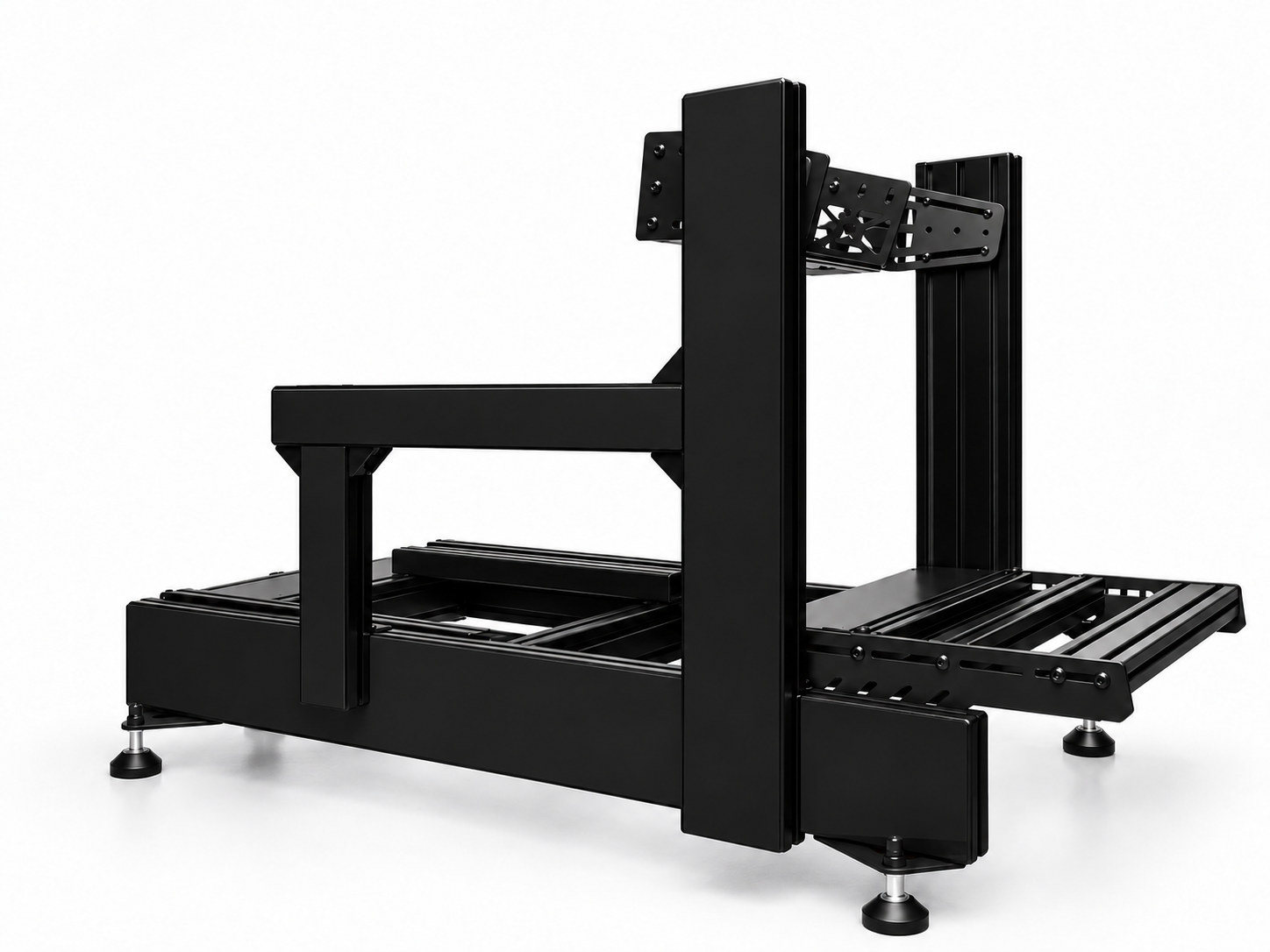

A new racing game is the perfect excuse to finally fix your sim setup. Hot Lap Racing doesn’t require a hardcore sim build, but a proper cockpit makes it more fun, more comfortable, and surprisingly more controllable.
Release note: Hot Lap Racing was released Jul 16, 2024
This guide matches the game to the hardware: which cockpit makes sense, which seat style fits the driving, and how to think about monitor placement without overcomplicating it.
Key takeaways for Hot Lap Racing
- A cockpit isn’t just for realism — it makes arcade racers easier to control and more comfortable.
- A reclining seat is great when multiple people share the rig.
- Keep it simple: one monitor, easy entry/exit, and a stable wheel mount.
Wheelbase, pedals and controller choice (and why your cockpit matters)
Hot Lap Racing will run on anything from an entry-level gear-driven wheel to a 20+ Nm direct drive wheelbase. The key is matching the cockpit to the forces you’re generating.
- Entry wheels (Logitech G29/G923, Thrustmaster T248/T300) work best when the wheel mount doesn’t bounce or flex.
- Mid-range direct drive (Fanatec CSL DD, Moza R9/R12, Asetek La Prima) benefits from a rigid 8020 cockpit so the force feedback stays clean.
- High-end direct drive (Simucube 2, Fanatec DD1/DD2, Asetek Invicta) really wants a stiff chassis and a strong pedal deck — otherwise you feel flex instead of detail.
- If you use a load-cell brake, cockpit stiffness often improves lap time more than upgrading wheel torque.
Cockpit choice: the part that makes everything else feel better
A good cockpit does two things: it keeps your wheel and pedals fixed, and it lets you repeat the same posture every session. That’s what makes any game feel more predictable — and more fun.
Rig picks from SimXPro
- R80 GT Sim Racing Cockpit – A simple cockpit that makes even arcade handling feel more predictable.
- GT - RS GT Sim Racing Cockpit – A great “living room friendly” cockpit option if you want a clean look.
- X80 GT Sim Racing Cockpit – If you might move toward sim racing later, start here and grow into it.
Seat setup: your “driving position” is a performance setting
Seat comfort and posture decide whether you can practice for 10 minutes or 2 hours. The best seat is the one that disappears while you drive.
- Set your hip position first, then wheel distance, then pedal reach.
- Support your shoulders so your hands can stay relaxed.
- Aim for repeatability: the same posture every session.
Seat picks that pair well with this style of game
- Basic Leather Reclining Seat + Slider – Best for casual, longer sessions and sharing with friends/family.
- Torq GT Seat – More “race car” support if you like to push a little harder.
Monitor setup: the fastest “feel” upgrade after a solid rig
Your monitor stand is the unsung hero: it keeps your display stable, aligned and easy to adjust. That’s what makes your FOV and seating position feel consistent.
Monitor stand options
- Single screen stand tiltable - VESA 100/200 – Single screen is usually ideal: fast to set up and easy for multiplayer.
- Light Triple screen setup VESA 75 - 100 – Triples are overkill for some arcade games—but hilarious fun if you have the space.
In-game settings worth checking (before you blame your hardware)
These settings take 5–10 minutes and usually fix 80% of the “something feels off” complaints:
- Input deadzones: wheel setups often need smaller deadzones than controllers.
- Assists: start with medium assists, then reduce one by one as you get comfortable.
- Sensitivity: use the cockpit to stay smooth rather than making the wheel ultra-sensitive.
- Vibration/FFB: aim for clarity, not maximum intensity.
Accessories that actually make a difference
For Hot Lap Racing, these are the add-ons that tend to improve the experience the most:
- A stable cockpit and a comfortable seat (still the biggest upgrade).
- A monitor stand that lets you set the correct height and distance.
- Thoughtful cable routing so the rig stays clean and easy to use.
Quick checklist before your first serious session
- Calibrate wheel rotation and pedal travel in-game (do this once, then stop chasing it).
- Set your seat distance so you can fully press the brake without locking your knee.
- Bring the monitor closer than you think, then lower it slightly so your eyes look at the horizon naturally.
- Do 10 minutes of slow laps to build muscle memory before pushing for a hotlap.
A simple SimXPro build that works (and how to upgrade it)
- Cockpit: R80 GT Sim Racing Cockpit
- Seat: Basic Leather Reclining Seat + Slider
- Monitor stand: Single screen stand tiltable - VESA 100/200
If you want a clear upgrade path: start by locking in your posture (seat + pedals), then upgrade rigidity (cockpit), then expand your view (monitor setup).

Share:
SimXPro pedal plates & decks: Choosing the right pedal mount for stiff brakes
Asphalt Legends Unite setup guide: Wheel + cockpit tips for arcade racers