
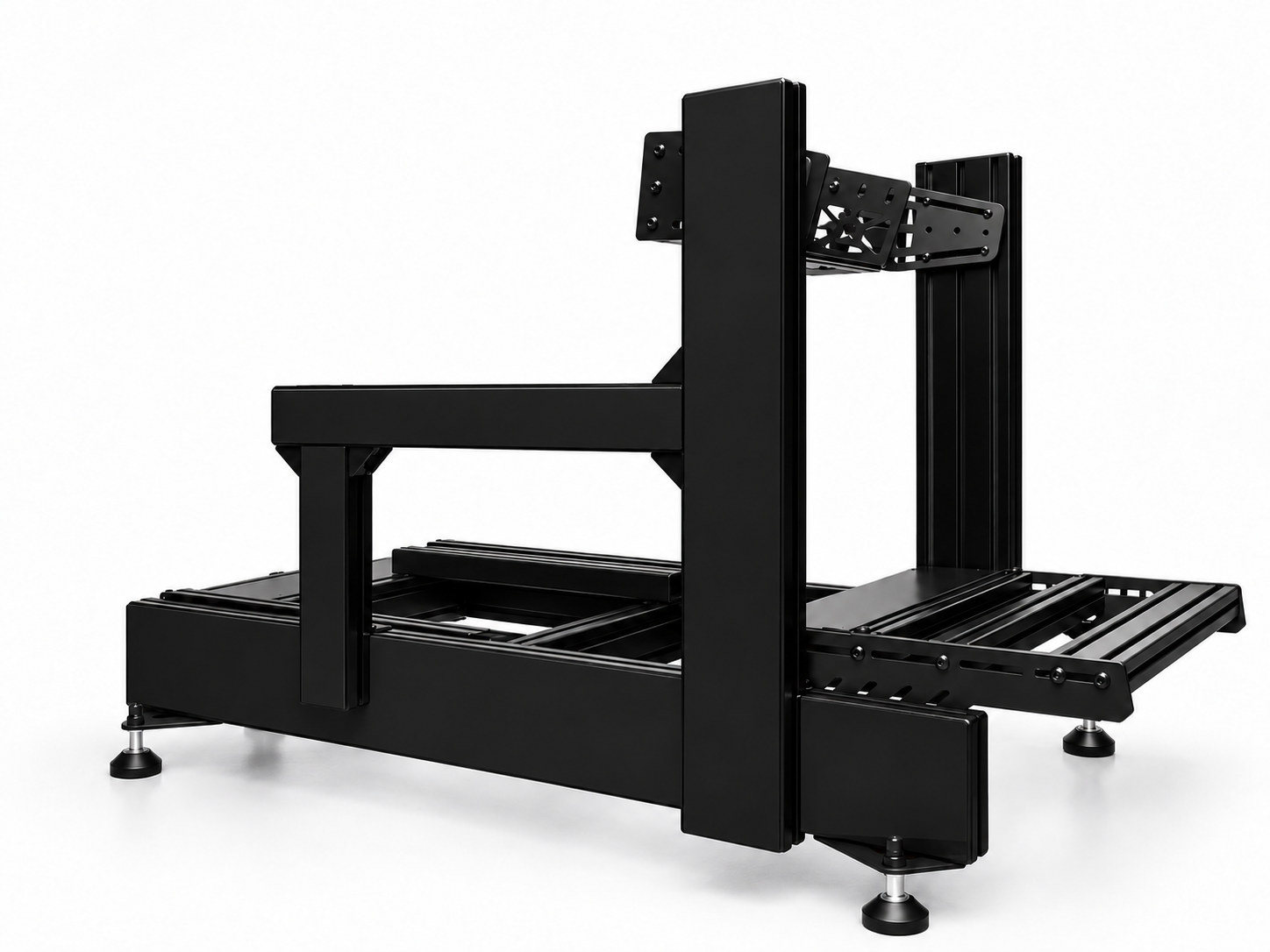

Seat sliders are brilliant — until they introduce movement. Sliders make it easy to share a rig or adjust for different driving styles. The goal is adjustability without flex. Here’s how to install sliders cleanly and keep your seating position repeatable.
Quick note: if you’re planning to upgrade wheelbase torque or go to stiff load-cell/hydraulic pedals, prioritize rigidity first—everything else feels better on a solid foundation.
A good position feels almost boring: you’re supported, relaxed and consistent. That boredom is what lets you drive at the limit without fighting your own body.
Quick overview
- Repeatability matters: mark positions so you can return instantly.
- A tiny seat rock becomes a huge braking inconsistency over time.
- Ergonomics is a lap-time upgrade disguised as comfort.
- If you can’t repeat your posture, you can’t repeat your braking.
- Seat height, pedal angle and wheel distance must work together.
- Adjustability matters if you share a cockpit.
What matters in practice
Comfort isn’t separate from performance. When your joints are neutral and your body is supported, you brake more consistently and steer with finer control.
Before you buy: checklist
- Slider travel range: enough for your height and pedal reach changes.
- Mounting hardware that doesn’t foul the slider mechanism.
- Seat-to-pedal distance that allows full brake pressure without stretching.
- Wheel height that keeps shoulders relaxed and elbows slightly bent.
- Pedal angle that lets you press the brake without lifting your heel.
- Monitor position that avoids neck strain and helps you spot apexes.
- Seat fit: width at hips/shoulders and support where you need it.
Step by step setup
- Build everything square: misalignment causes binding and noise.
- Torque-check after a week; sliders settle slightly after use.
- Set seat position first (it’s your reference point).
- Move pedals until you can brake hard without locking your knee.
- Set wheel distance so you aren’t reaching in high-speed corners.
- Adjust monitor height to keep your head neutral.
Hardware notes
Small changes compound. A few millimetres on pedal distance, a few degrees on seat angle, and a small wheel height adjustment can remove strain and improve control.
Relevant SimXPro options
- Universal slider — A slider kit for quick seat adjustment and sharing a rig with others.
- Universal seat mount. Set L+R — Universal seat mounts to fit common bucket seat patterns on profile rigs.
- GT - RS GT Sim Racing Cockpit — A rigid GT-style aluminium profile cockpit with a strong upgrade path.
Common pitfalls
- Using uneven mounting points so the slider twists under load.
- Mounting cables where the slider can pinch them.
- Ignoring seat mounting and living with a twisted posture.
- Sitting too far from the pedals and ‘pointing’ your toes at the brake.
- Wheel too high: raised shoulders, tense hands, shaky inputs.
- Pedals too close: knees jammed, reduced fine control.
Questions people ask
Do sliders reduce stiffness?
They can slightly, but good sliders and correct installation minimise it. If you press very stiff brakes, focus on a rigid pedal deck and solid seat mounts too.
How do I share a rig with someone else?
Seat sliders help, but you also need pedal adjustment (or marked positions). Repeatability is the goal.
What changes first: wheel or pedals?
Seat and pedals should be set together. Wheel position then follows so your upper body stays relaxed.
Do I need a bucket seat?
A bucket seat can lock you in and help consistency, but the ‘best’ seat is the one that fits your body and lets you drive pain-free.
Bottom line: Aim for calm confidence. Stable mounting, sensible settings and a comfortable position make everything else easier — and that’s usually where lap time comes from.
Want to go deeper? Browse our Sim Racing Guides for more buyer guides, compatibility checks and setup tips.
Related guides
- Aluminium profile vs tubular sim rigs: Which should you choose?
- Getting started in sim racing: Choose your first wheel, pedals and cockpit
- Real car seats in sim rigs: Junkyard bargain or comfort trap?
- Short sim racer setup: Reaching the pedals without sliding forward
- Cooled seat for sim racing
- Ventilated sim racing seat
- Bucket seat width guide (s/m/l/xl)
- Best sim racing seat for back pain
- Seat slider vs fixed mount pros and cons
- Side mount vs bottom mount seat brackets

Share:
Seat belt harnesses in sim racing: Comfort, immersion and fitment
Shared sim rig setup: How to make one cockpit fit multiple drivers