
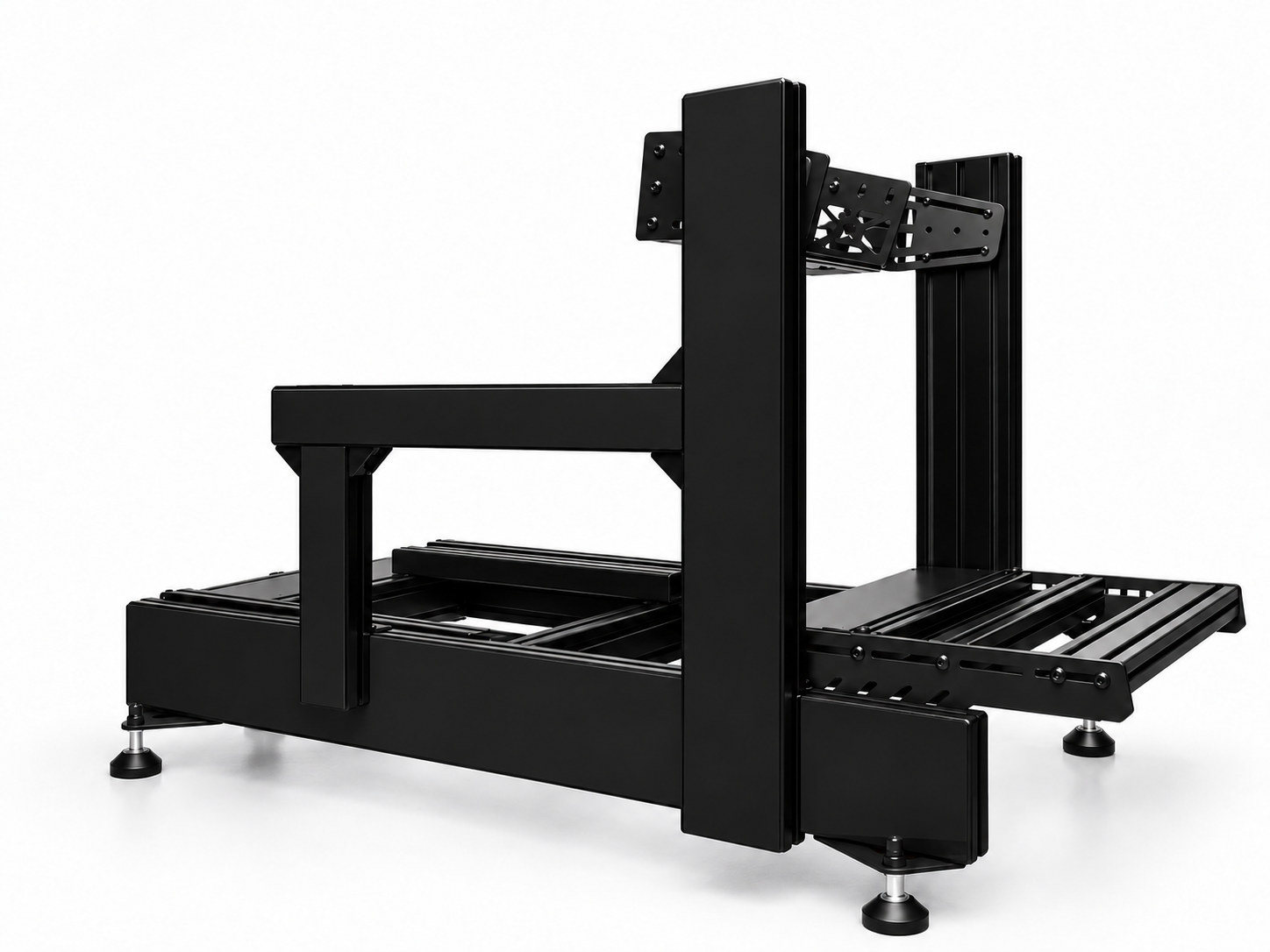

A harness in sim racing is one of those upgrades that sounds extreme… until you try a long stint and realize how much it changes your body position.
For some drivers it’s pure immersion. For others, it’s a comfort and consistency tool — it keeps you planted so your braking and steering inputs stay repeatable.
Why sim racers use harnesses
- Consistency: you don’t brace with your arms under heavy braking.
- Comfort: you feel supported in long sessions.
- Immersion: it adds “race car” sensation, especially with motion/tactile.
When a harness is not a good idea
- If your seating position is wrong (fix posture first).
- If the harness would restrict your breathing or shoulder movement.
- If you can’t mount it securely to a proper rig structure.
4‑point harness basics for sim rigs
Most sim setups use a 4-point harness. It’s simpler than 6-point racing harnesses and easier to integrate with typical seats and rigs.
Fitment and mounting considerations
- Anchor points: straps must attach to solid structure. Aluminium profile rigs make this easier because you can add mounting points cleanly.
- Strap angle: shoulder straps should pull back comfortably, not down onto your shoulders.
- Quick release: don’t make it annoying to get in and out of the rig.
Product option
- 4‑Point Seat Harness — a straightforward harness option for sim rigs.
Important: Harnesses for sim racing are for simulation use. If you have any discomfort, numbness, or pain, stop using it and adjust your setup (or skip the harness entirely).

Share:
Rig maintenance 101: How to stop squeaks, creaks and loose bolts
Seat sliders 101: How to install them without flex, rattles or misalignment