
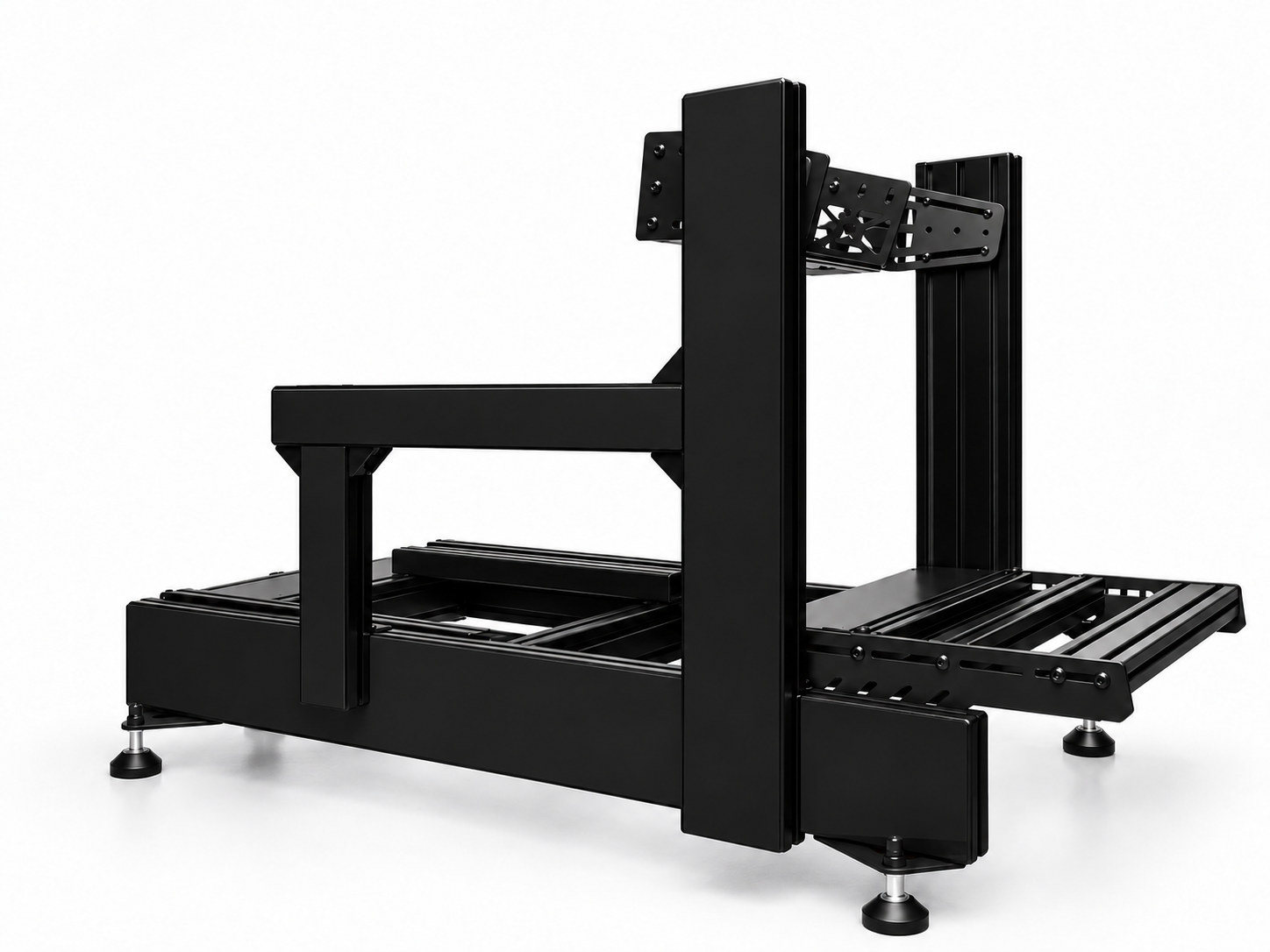

‘8020’ is one of those sim racing terms that shows up everywhere— and almost nobody explains it clearly.
In plain English: an 8020 (or 80/20) rig is a cockpit built from aluminium extrusion profiles—the modular, slotted beams that bolt together like industrial Lego.
Why aluminium profile rigs became the default
- Rigidity: strong profiles + proper bracing = less flex under direct drive and stiff pedals.
- Adjustability: T-slots let you move mounts and brackets without drilling.
- Upgrade potential: you can add shifter mounts, monitor stands, button boxes and more over time.
- Compatibility: it’s easier to adapt to different wheelbase and pedal bolt patterns.
What actually matters when buying an aluminium profile rig
- Wheel mount strength: this is where you feel flex first.
- Pedal deck stiffness: especially important for load cell/hydraulic pedals.
- Adjustment range: can you achieve a comfortable GT or formula posture?
- Accessory ecosystem: are mounts and upgrades easy to source later?
Where SimXPro fits
SimXPro uses aluminium profile across its cockpit lineup, with different rigs aimed at different goals: compact, high-end GT, heavy-duty, and formula posture.
- Compact entry: SimXPro R80
- High-end GT: SimXPro GT-RS
- Reinforced max rigidity: SimXPro XT120
- Formula posture: SimXPro FR
If you want one takeaway: aluminium profile rigs stay relevant because they adapt. Your hardware will change. A good 8020 rig doesn’t care.

Share:
Vr motion sickness in sim racing: 12 fixes that make vr usable
How to mount a keyboard tray on an aluminium profile rig (without knee hits)