
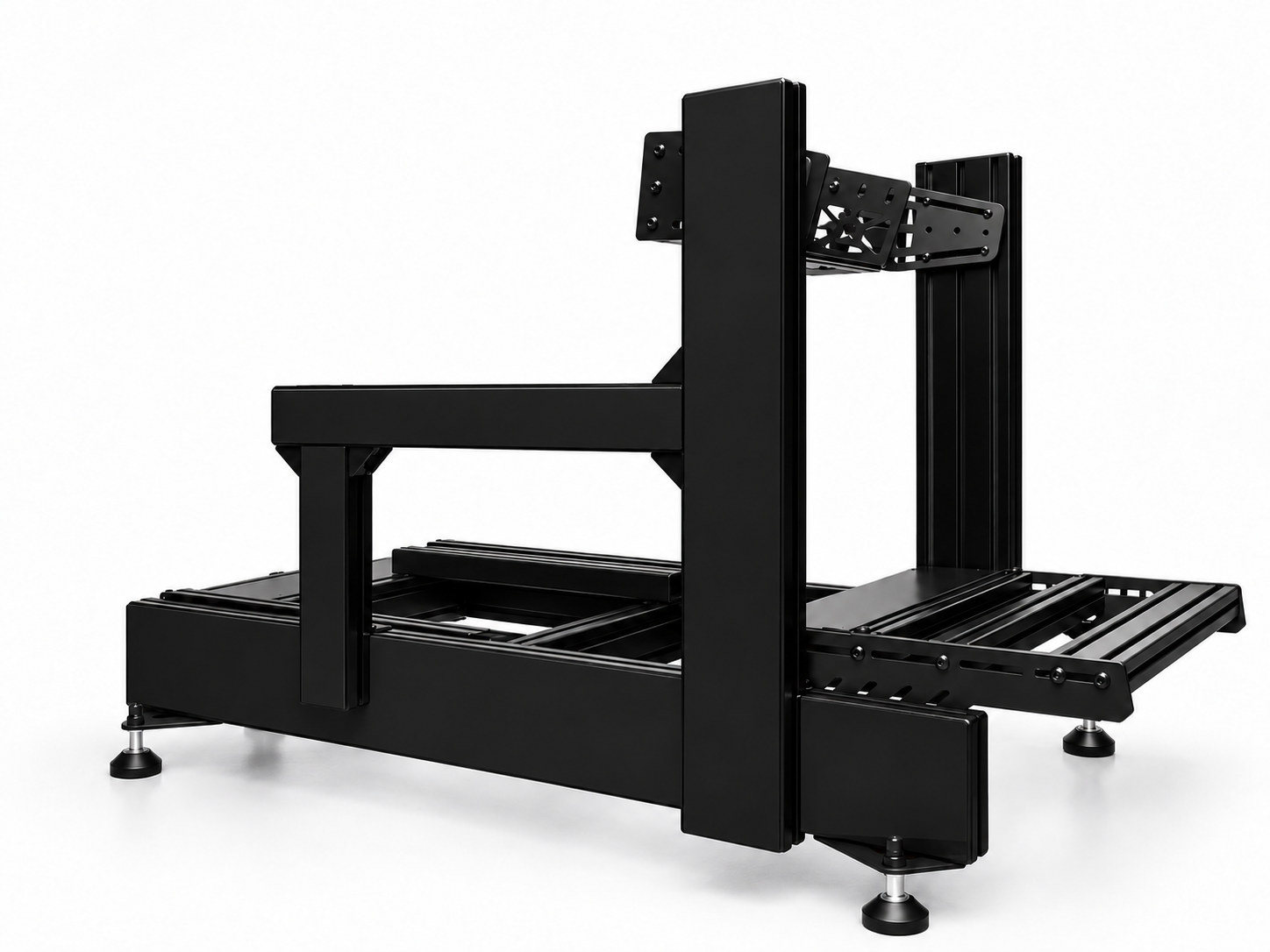

The SimXPro GT-RS is built as a high-end GT cockpit—a track-ready foundation designed to stay with you as your sim racing evolves.
That last part matters. The GT-RS isn’t just about stiffness today; it’s designed around an ecosystem idea: upgrade components as you change wheelbases, pedals and displays, without replacing the whole rig.
Who the GT-RS is for
- Direct drive drivers who want a flex-free steering feel and consistent feedback.
- Load cell and hydraulic pedal users who need a rigid pedal platform for repeatable braking.
- Racers planning long-term upgrades who want to add triples, shifters, handbrakes and accessories over time.
How to configure a GT cockpit driving position
A GT position should feel natural and sustainable:
- Wheel height: around chest height, with relaxed shoulders and slightly bent elbows.
- Pedal distance: you should reach full brake pressure without locking your knee straight.
- Seat angle: reclined slightly, supporting your lower back and hips for long sessions.
Monitor strategy: integrated mount or freestanding stand?
If you’re running a single screen or ultrawide, a sturdy mount with micro-adjustment makes life easy. If you’re running triples, stability and alignment are everything.
- Integrated option for the GT-RS: GT-RS Triple Monitor Mount
- Freestanding option for heavy triples: Heavy Triple Screen Stand
Add-ons that make the biggest difference
- Seat mounting: choose solid brackets and rails. Start with a universal seat mount set and add a slider if you share the rig.
- Shifter/handbrake: add a mount that places controls at a natural height and distance. A simple option is the shifter profile mounting point.
- Cable management: plan power and USB routing early—especially if you add bass shakers or motion later.
If you want one rule: build the GT-RS around your driving position first, then mount hardware. A rig that feels perfect to sit in makes every wheelbase and pedal set feel better.

Share:
Simucube activepedal: What active pedals change and what your rig needs
SimXPro R80: The compact aluminium profile rig that still leaves room to grow