
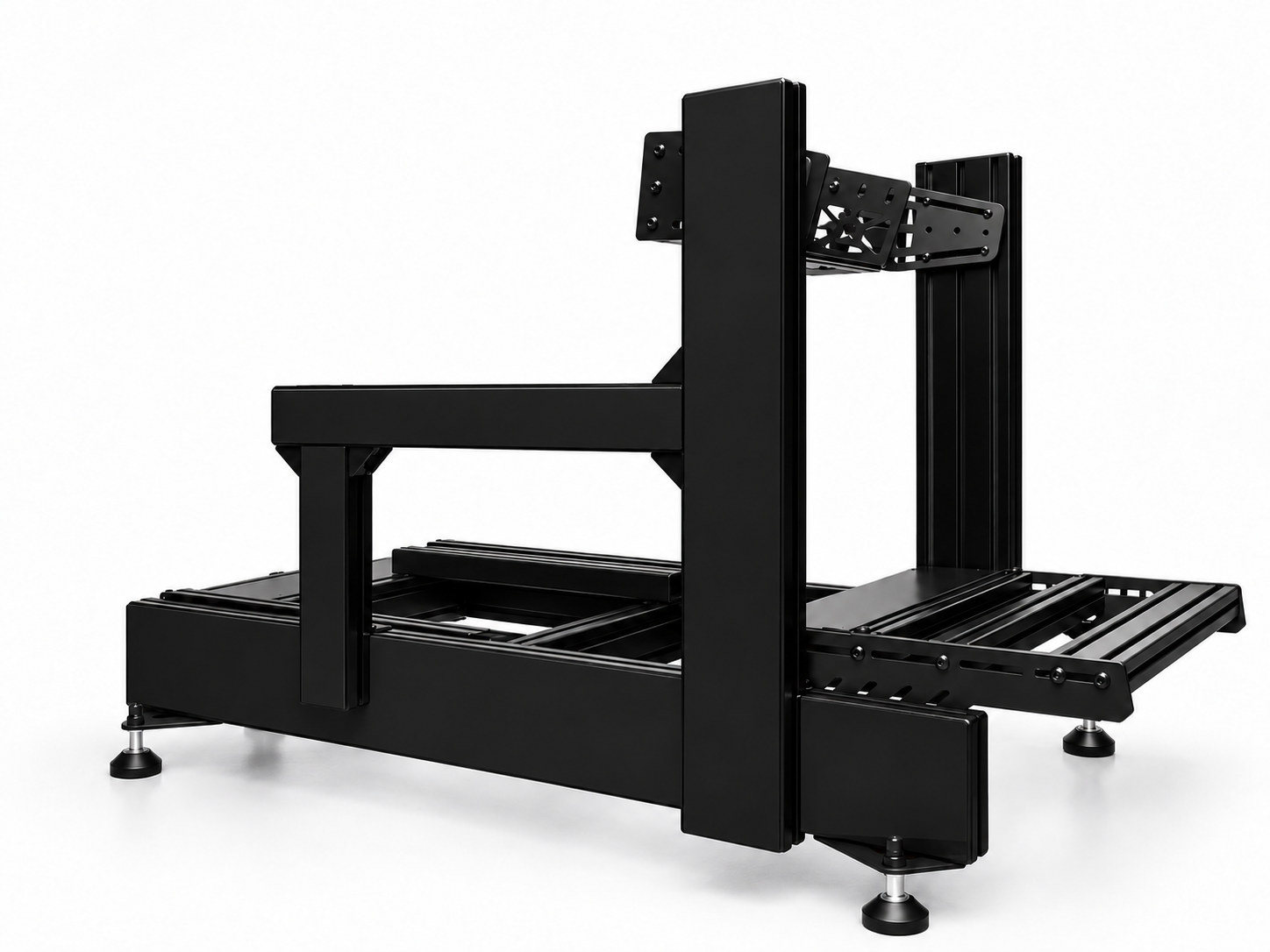

The SimXPro R80 is built for a very specific sim racer: someone who wants a ‘real rig’ now, but doesn’t want to overbuy.
It’s positioned as a compact, simplified aluminium profile cockpit—still rigid, still adjustable, and still compatible with a wide range of hardware.
Why compact rigs are having a moment
Not everyone has a dedicated sim room. And even if you do, a cockpit that fits cleanly into a space makes you more likely to use it. More seat time beats more spec sheet.
What to look for in an entry aluminium profile rig
- Rigidity where it counts: wheel mount and pedal deck stability.
- Adjustment range: you should be able to dial in a proper GT position.
- Upgrade potential: mounts and accessories should bolt on without drilling adventures.
A smart upgrade path from the R80
- Add a better monitor solution: a sturdy stand like the SimXPro single screen stand keeps your view stable and helps you set correct FOV.
- Improve ergonomics with seat hardware: seat brackets and a slider make it easier to find your position (especially in shared setups).
- Upgrade pedals before wheel torque: stiffer pedals often make you faster sooner than a stronger wheelbase.
If you’re building your first cockpit and you want something that feels serious but doesn’t dominate your room, the R80 hits a sweet spot: compact, clean, and future-friendly.
Related guides
- SimXPro vs trak racer rig: A practical buyer’s guide for aluminium profile cockpits
- SimXPro vs sim lab rig: How to choose the right aluminium profile cockpit
- What is an 8020 sim rig? the aluminium profile explained in plain english
- Getting started in sim racing: Choose your first wheel, pedals and cockpit

Share:
SimXPro GT RS: Setup guide, best add ons and who it’s for
SimXPro single monitor stand: Set the right height, distance and FOV