

A single monitor setup can still feel ‘real’—if the monitor is in the right place. The biggest issue isn’t the screen size. It’s height, distance and stability.
A good monitor stand lets you bring the screen closer, match eye level, and lock alignment so it doesn’t move when you hit kerbs.
Why a dedicated stand beats a desk mount for sim racing
- Stability: a solid stand reduces shake from direct drive and bass shakers.
- Positioning: it’s easier to place the screen at the correct height and distance.
- Consistency: your view stays the same, session after session.
The SimXPro approach: rigid profiles + steel brackets
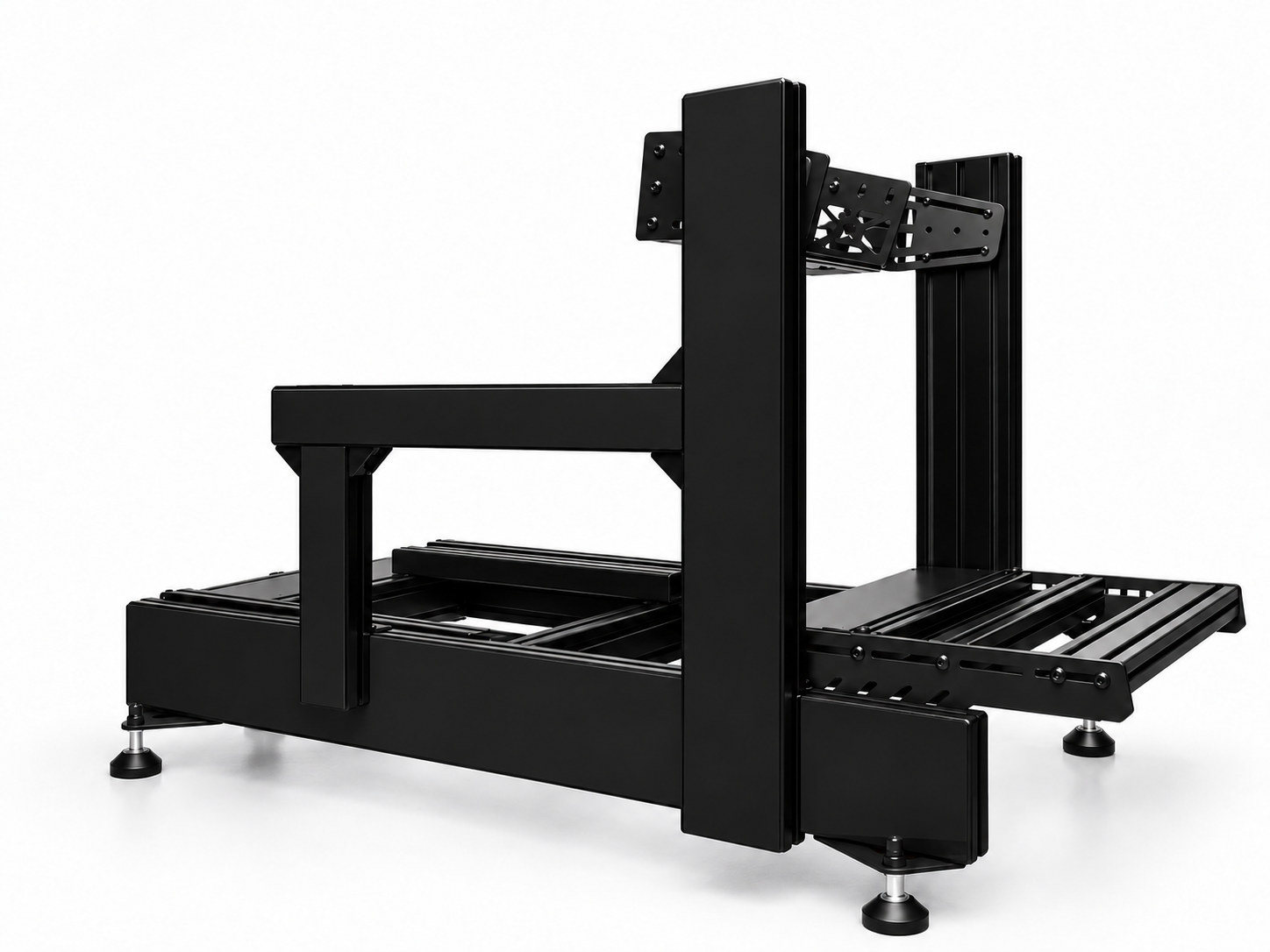
SimXPro’s single screen stand is built from aluminium profiles with steel brackets and a tiltable VESA mount designed for precise micro-adjustment—exactly what you need for FOV tuning.
- Product page: SimXPro Single Screen Stand (tiltable)
- VESA support depends on configuration (commonly 75x75 and 100x100, with options for larger patterns).
- Note: monitor screws/spacers are not always included—use the correct hardware for your display.
How to place a single monitor for a ‘sim racing’ view
- Height: aim for the horizon to sit near eye level when you’re in driving posture.
- Distance: closer usually looks more ‘real’ (and improves FOV accuracy).
- Angle: keep the screen perpendicular to your line of sight to avoid distortion.
Once height and distance are right, set your in-game FOV. Don’t ‘eyeball’ it—use a calculator or your sim’s built-in method, then adjust in small steps.
Common mistakes (and why they matter)
- Monitor too high: causes neck tension and makes apexes harder to judge.
- Monitor too far: shrinks the world; you drive ‘late’ because everything looks slower.
- Wobbly mount: your eyes get fatigue from micro-movement you don’t consciously notice.
A single monitor can absolutely be a weapon—especially for endurance or league racing. The goal is simple: put the screen where it belongs, lock it down, and let your brain focus on driving.

Share:
SimXPro R80: The compact aluminium profile rig that still leaves room to grow
SimXPro X80 gt cockpit: Setup guide, upgrade path and who it’s for