
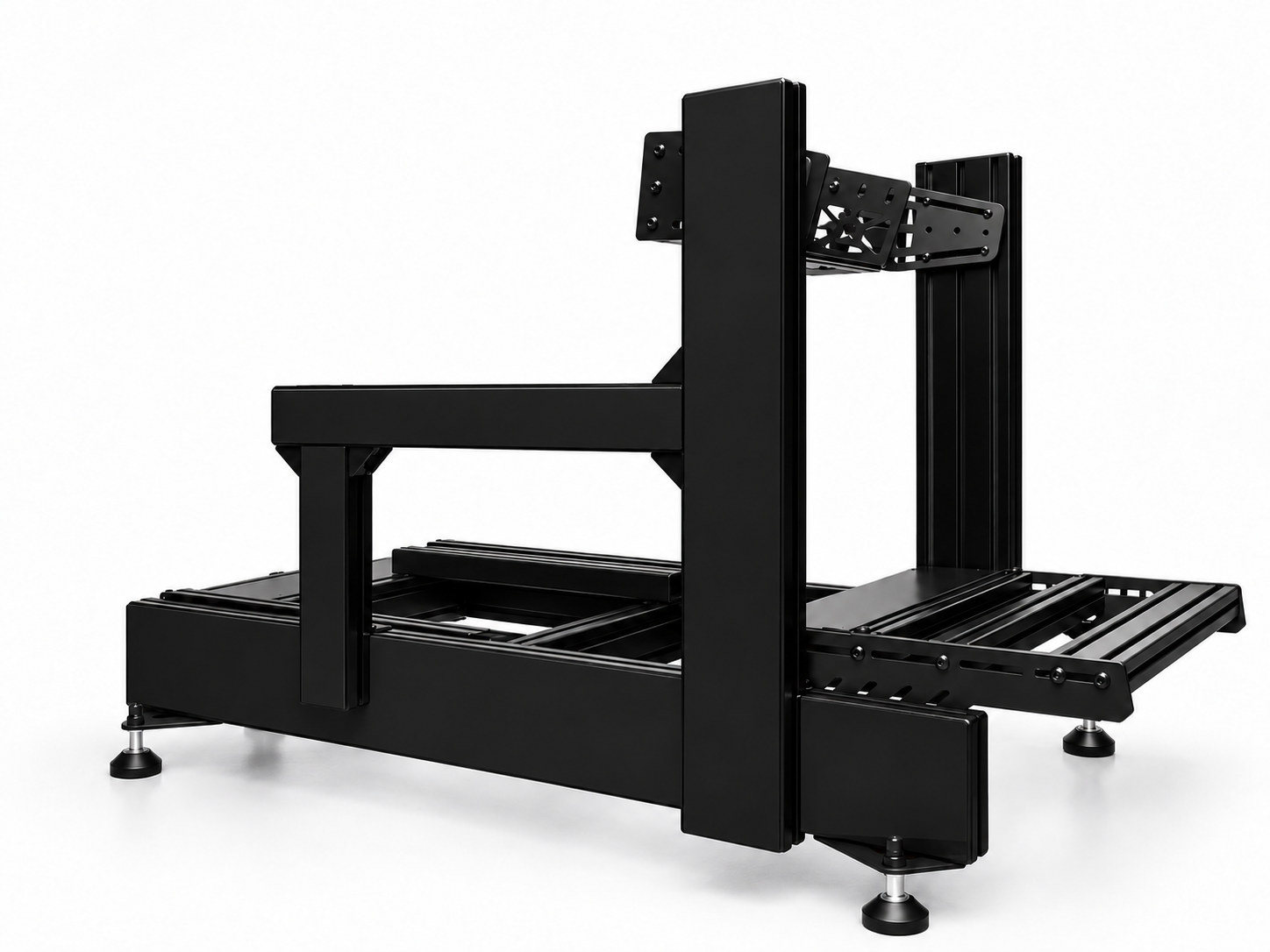

The best GT cockpit is the one you can grow into without rebuilding. The SimXPro X80 is built around a GT driving position with aluminium profile adjustability. This guide explains who it suits, how to set it up for comfort and rigidity, and which upgrades make the biggest difference.
Quick note: if you’re planning to upgrade wheelbase torque or go to stiff load-cell/hydraulic pedals, prioritize rigidity first—everything else feels better on a solid foundation.
Think modular: build the foundation, dial ergonomics, then bolt on upgrades. That’s how a cockpit stays enjoyable for years, not months.
Quick overview
- Prioritise pedal deck stiffness first — it affects every lap.
- Plan accessories early (shifter/handbrake/monitor) to avoid rebuilds.
- Small adjustability details matter more than they sound.
- Stiffness and ergonomics are the real performance features.
- A cockpit isn’t just a frame — it’s the foundation of feel.
- Rig choice determines how far you can upgrade later.
What matters in practice
A rigid, adjustable chassis turns upgrades into bolt-ons instead of rebuilds. Get the foundation right and every wheelbase, pedal or monitor you add later will perform closer to its potential.
Before you buy: checklist
- Wheelbase mounting needs: bottom mount vs side/front adapters.
- Pedal stiffness goal: load cell and hydraulic sets demand rigidity.
- Accessory mounts: shifter, handbrake, button box, trays.
- Wheelbase mounting options (bottom / side / front).
- Pedal deck stiffness and adjustability for load cell/hydraulic sets.
- Seat mounting range for different driver heights.
- Monitor mounting approach (integrated vs freestanding).
Step by step setup
- Build square, then lock in seat/pedal position before touching monitors.
- Torque-check all fasteners after your first week of driving.
- Add wheelbase and lock in steering height/tilt.
- Finish with displays, cable management and peripherals.
- Plan your final ‘endgame’ hardware, then work backwards.
- Build the core chassis square and torque-check fasteners.
Hardware notes
Think in modules: chassis, seat, pedals, wheelbase, monitors, accessories. When each module is mounted securely, the whole cockpit feels more ‘real’ and less like a DIY project.
Relevant SimXPro options
- X80 GT Sim Racing Cockpit — A GT cockpit platform aimed at serious direct drive stability and adjustability.
- Universal shifter - button box - handbrake bracket — A bracket to mount a shifter, handbrake or button box within easy reach.
- Single screen stand tiltable - VESA 100/200 — A freestanding single monitor stand with wide VESA support and tilt.
Common pitfalls
- Setting monitor position before ergonomics (and then redoing both).
- Mounting peripherals with no cable plan and creating future headaches.
- Skipping accessories you’ll add later (and forcing a rebuild).
- Placing monitors first and then redesigning the cockpit position.
- Not leaving service loops for cables near moving parts.
- Overbuilding in one area and underbuilding the pedal mount.
Questions people ask
Is the X80 suitable for direct drive?
It’s designed for serious sim racing hardware. The key is mounting correctly and ensuring the wheelbase and pedals are attached without flex.
Do I need an integrated monitor mount?
Not always. Integrated mounts look clean and move as one unit. Freestanding stands can be easier to position and isolate vibration.
What’s the best first accessory?
Usually a solid pedal solution (stiffer deck/plate) or a monitor mount that improves visibility — both help consistency immediately.
Can I start simple and upgrade later?
Yes — that’s the advantage of modular profile rigs. Plan mounting points and cable paths early so upgrades bolt on cleanly.
Bottom line: Aim for calm confidence. Stable mounting, sensible settings and a comfortable position make everything else easier — and that’s usually where lap time comes from.
Want to go deeper? Browse our Sim Racing Guides for more buyer guides, compatibility checks and setup tips.

Share:
SimXPro single monitor stand: Set the right height, distance and FOV
SimXPro XFR formula cockpit: Seating position, wheel angle and monitor setup