

If sim racing hurts, something is off. Pain isn’t a badge of honour—it’s a signal that your posture and ergonomics need attention.
Good posture isn’t about sitting ‘upright’. It’s about putting your joints in ranges where you can repeat inputs comfortably.
The posture fundamentals (quick checklist)
- Pelvis support: sit into the seat, not on the edge. Avoid slouching.
- Wheel reach: elbows slightly bent, shoulders relaxed.
- Wheel height: chest/shoulder height is a strong starting point for GT.
- Pedal reach: full brake pressure without locking the knee.
- Pedal spacing: feet should land naturally—no hip twisting.
Common pain points and fixes
- Lower back pain: seat angle too upright or slouched posture. Add support and adjust recline.
- Knee pain: pedals too close or too low. Increase distance and adjust pedal angle.
- Shoulder/neck tension: wheel too far or too low. Bring it closer and raise slightly.
- Foot numbness: pedal angle too steep or pressure on heel. Adjust and check footwear.
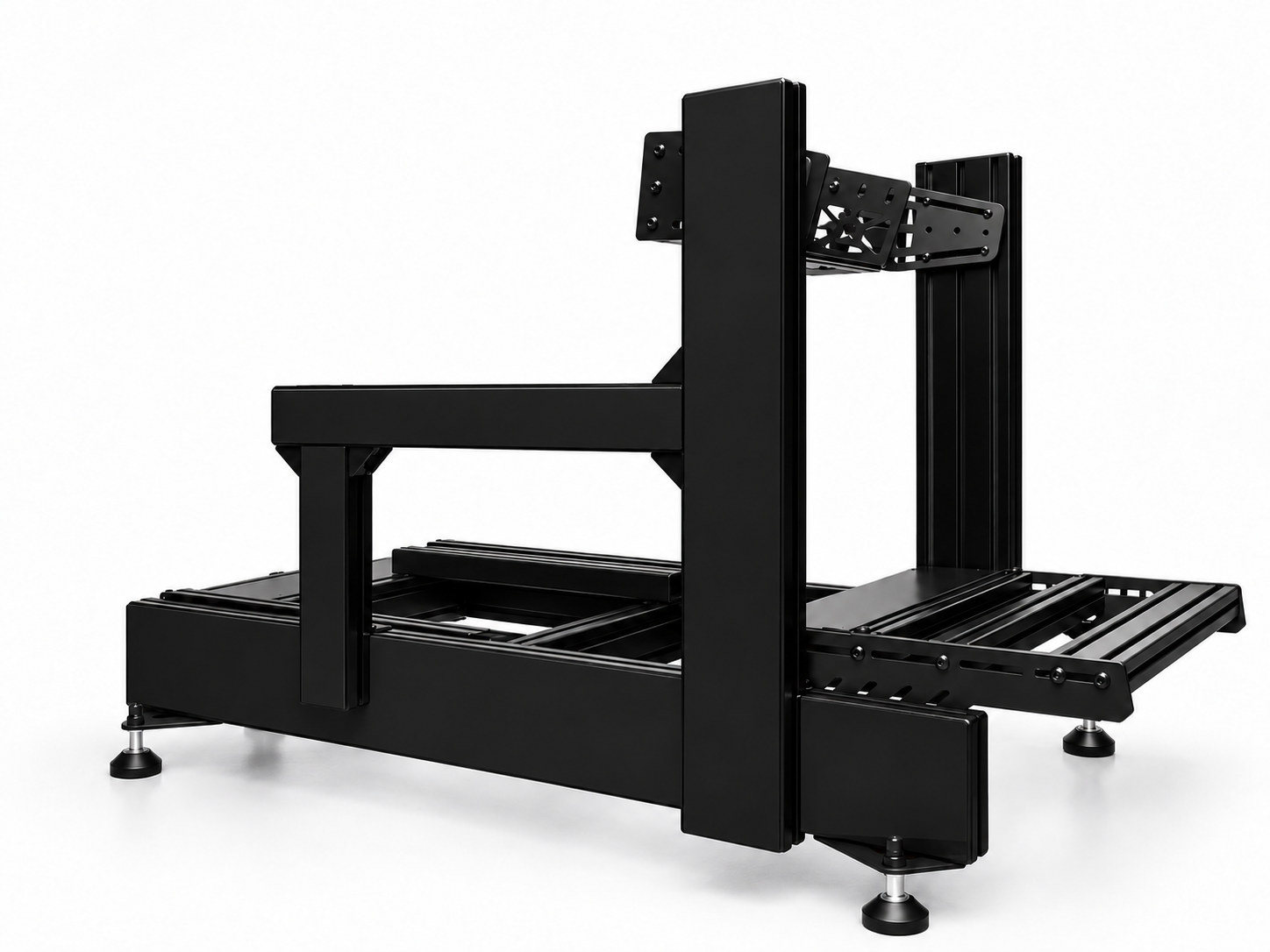
Why a rigid rig helps posture
If your seat moves under braking, you compensate with muscles. That creates fatigue and pain. A stable cockpit holds your posture so your body can relax.
Fix posture first. It makes every other upgrade feel better—and it lets you drive more, which is the biggest ‘performance gain’ of all.

Share:
Sim racing monitor distance and FOV: The setup change that makes everything feel real
Simhub dashboard on a tablet: Cheap second screen setup that works