
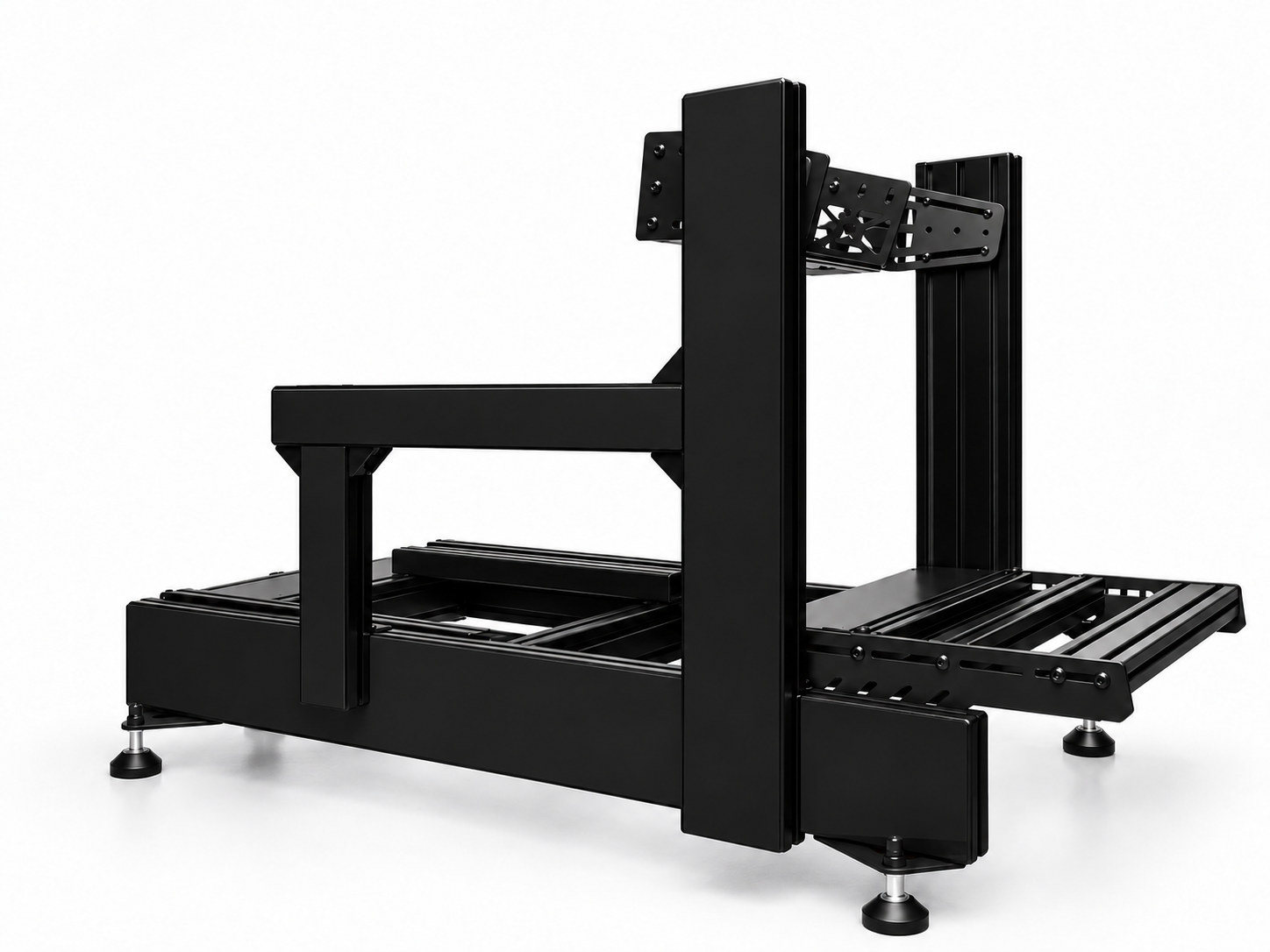

If you’ve built an aluminium profile rig, here’s a secret: the first “tight” build is rarely the final build.
After a few sessions, joints settle and loads find their true paths. Re-torquing is normal — and it’s the difference between a rig that feels solid and one that slowly becomes creaky.
When to re-torque
- After the first week of regular use
- After adding new hardware (wheelbase upgrade, tactile, motion, heavy monitors)
- If you hear new noises or notice new flex
- Every few months as basic maintenance
Re-torque checklist (high priority)
- Wheel mount and uprights
- Pedal deck brackets and side rails
- Seat mounts and seat slider bolts
- Shifter / handbrake brackets
- Monitor stand joints (if integrated)
Re-torque checklist (quality-of-life)
- Keyboard and mouse trays
- Button box mounts
- Accessory arms and side mounts
Don’t overtighten blindly
Over-tightening can strip threads or crush components. Tighten evenly, check alignment, and use a consistent approach.

Share:
Race starts without drama: Surviving Turn 1 in online racing
Rig maintenance 101: How to stop squeaks, creaks and loose bolts