

If you’ve been waiting for a reason to upgrade your cockpit, this is it. New Star GP rewards repeatable braking and tiny steering inputs — which means any flex in your rig or sloppy seat position shows up immediately in lap time.
Release note: New Star GP was released Mar 7, 2024
This guide matches the game to the hardware: which cockpit makes sense, which seat style fits the driving, and how to think about monitor placement without overcomplicating it.
Key takeaways for New Star GP
- Prioritise a repeatable braking posture (hip position and pedal distance matter more than wheel height).
- If you run a load-cell brake or high-torque wheelbase, rig stiffness becomes a performance feature, not a luxury.
- A formula-style seat angle can feel amazing — but only if your knee and ankle angles are sustainable for long sessions.
Wheelbase, pedals and controller choice (and why your cockpit matters)
New Star GP will run on anything from an entry-level gear-driven wheel to a 20+ Nm direct drive wheelbase. The key is matching the cockpit to the forces you’re generating.
- Entry wheels (Logitech G29/G923, Thrustmaster T248/T300) work best when the wheel mount doesn’t bounce or flex.
- Mid-range direct drive (Fanatec CSL DD, Moza R9/R12, Asetek La Prima) benefits from a rigid 8020 cockpit so the force feedback stays clean.
- High-end direct drive (Simucube 2, Fanatec DD1/DD2, Asetek Invicta) really wants a stiff chassis and a strong pedal deck — otherwise you feel flex instead of detail.
- If you use a load-cell brake, cockpit stiffness often improves lap time more than upgrading wheel torque.
Cockpit choice: the part that makes everything else feel better
Formula games make small setup problems obvious. If the pedal deck flexes, your braking becomes inconsistent. If the wheel deck moves, your steering precision disappears. A rigid cockpit gives you a stable reference point — and stability is speed.
Rig picks from SimXPro
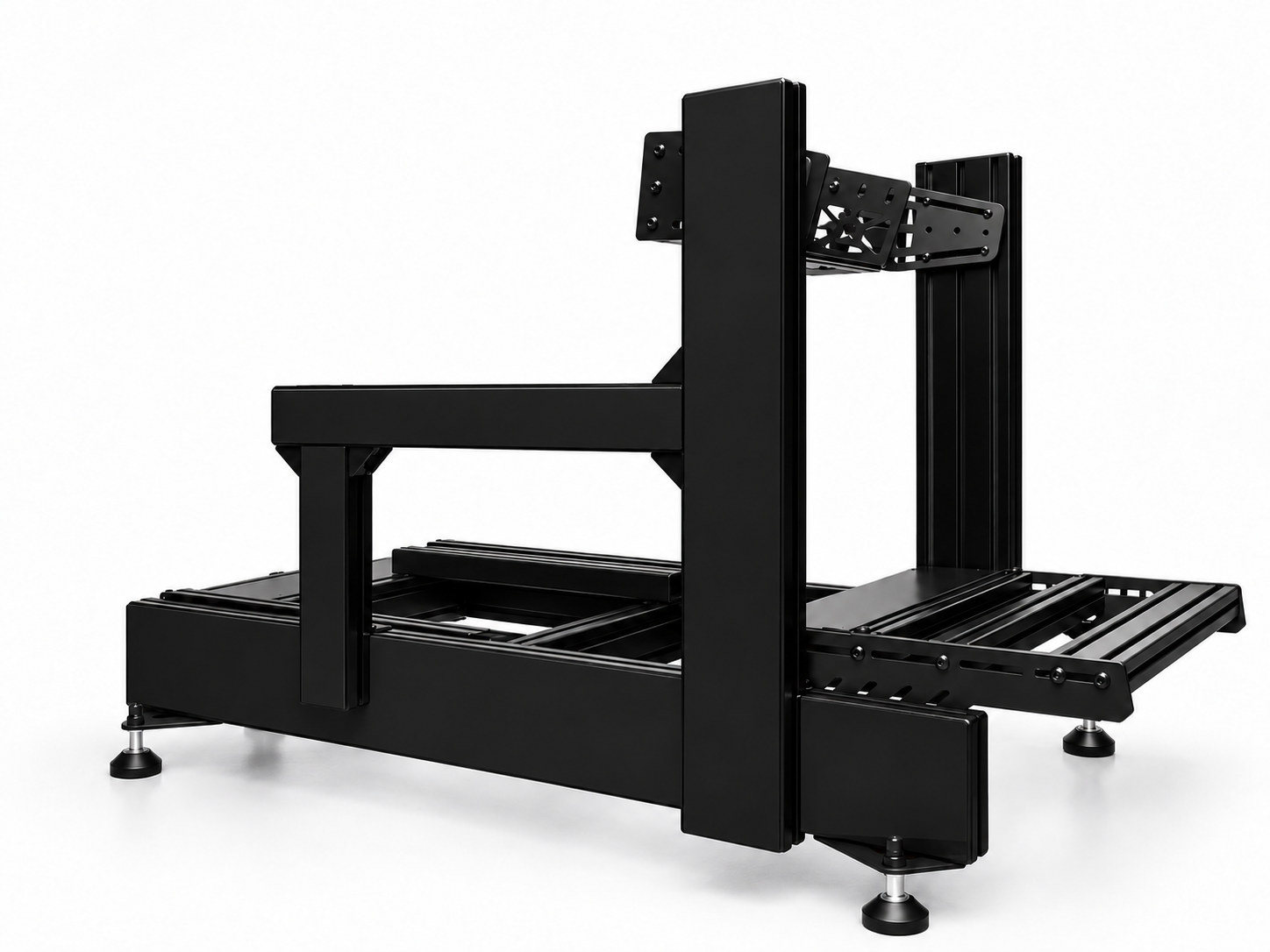
- FR Formula Sim Racing Cockpit – A dedicated formula seating geometry when you want a low, laid-back position that matches open-wheel games.
- XFR - Black Powder coating – A formula-focused profile cockpit that’s easier to fine-tune for different drivers and different games.
- XT120 GT Sim Racing Cockpit – A stiff 8020-style cockpit when you want “no excuses” braking and zero flex with high-torque wheelbases.
Seat setup: your “driving position” is a performance setting
With formula-style cars, the temptation is to go extremely reclined. That can feel authentic — but if your knees are too bent or your ankles are strained, you’ll lose consistency. Aim for a position you can hold without tension.
- Set hip position first. Once your hips stop sliding, your braking becomes repeatable.
- Keep your shoulders supported so you can relax your hands on the wheel.
- If your legs go numb, raise the pedal deck or reduce the recline angle slightly.
Seat picks that pair well with this style of game
- Olix GP Seat – A formula-style bucket that supports a more reclined, legs-up position.
- Torq GT Seat – A GT-style bucket when you prefer a slightly more upright position (also nice if you play a mix of games).
Monitor setup: the fastest “feel” upgrade after a solid rig
Formula racing is all about hitting braking markers and apexes at high speed. Your monitor doesn’t need to be huge, but it needs to be in the right place. The right height and distance makes the cockpit view feel natural and reduces guesswork.
Monitor stand options
- Integrated Triple Screen Setup Heavy - VESA 100/200 - Black – Integrated triples for a clean look and stable alignment once you set them.
- HEAVY Triple screen setup VESA 100 - 200 – A freestanding heavy triple stand if you want maximum adjustability and easy maintenance.
- Single screen stand tiltable - VESA 100/200 – A single stand that makes it easier to dial height and distance for a correct FOV.
In-game settings worth checking (before you blame your hardware)
These settings take 5–10 minutes and usually fix 80% of the “something feels off” complaints:
- Force feedback: avoid clipping (too strong = less detail).
- Brake calibration: set deadzones to zero and adjust saturation so full braking is comfortable.
- Steering rotation: start with the wheelbase’s default and adjust per car if needed.
- Camera: cockpit view + a stable horizon helps you hit braking references.
Accessories that actually make a difference
For New Star GP, these are the add-ons that tend to improve the experience the most:
- A stiff brake pedal mount (load-cell brakes love rigid frames).
- A solid wheel mounting solution (front-mount or standard deck depending on wheelbase).
- Triples or a properly positioned single monitor to hit braking references consistently.
Quick checklist before your first serious session
- Calibrate wheel rotation and pedal travel in-game (do this once, then stop chasing it).
- Set your seat distance so you can fully press the brake without locking your knee.
- Bring the monitor closer than you think, then lower it slightly so your eyes look at the horizon naturally.
- Do 10 minutes of slow laps to build muscle memory before pushing for a hotlap.
A simple SimXPro build that works (and how to upgrade it)
- Cockpit: FR Formula Sim Racing Cockpit
- Seat: Olix GP Seat
- Monitor stand: Integrated Triple Screen Setup Heavy - VESA 100/200 - Black
If you want a clear upgrade path: start by locking in your posture (seat + pedals), then upgrade rigidity (cockpit), then expand your view (monitor setup).

Share:
Taxi life setup guide: Comfortable seating for long driving sessions
Taxi life setup guide: Comfortable seating for long driving sessions