
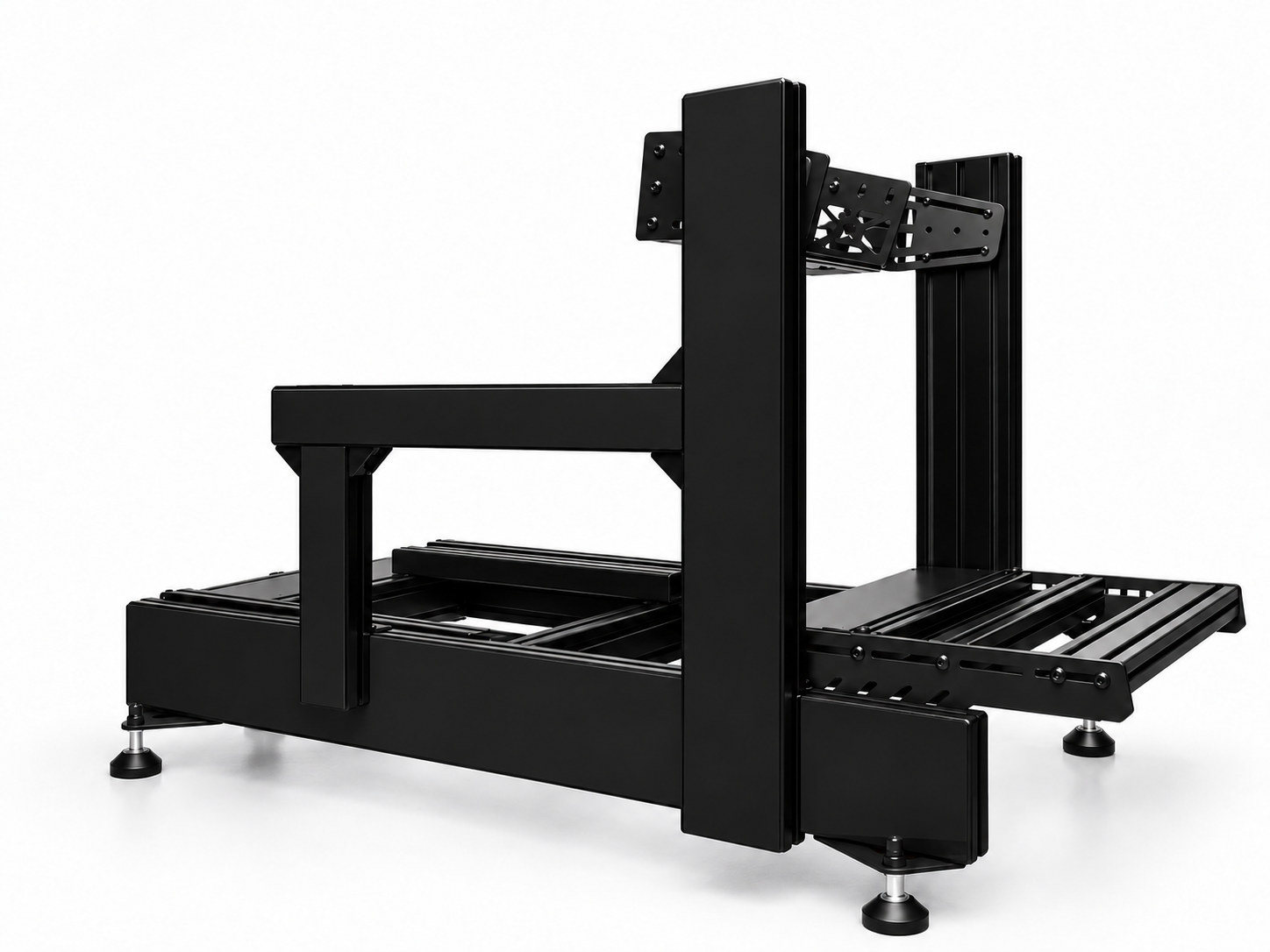

An active seat belt tensioner pulls against your body under braking and acceleration. Done well, it adds a cue your brain instantly understands: your body is “loaded”.
It can feel dramatic — but it can also feel pointless if your rig flexes, your harness doesn’t fit, or the system is tuned aggressively.
What an active belt tensioner adds
- Braking load: helps simulate the forward weight shift you feel in a real car.
- Traction / acceleration cues: especially in powerful cars where the rear squats.
- Extra immersion in VR: because your body receives a “real” signal when your eyes do.
What it doesn’t fix
- It won’t make a weak braking technique strong.
- It won’t replace good pedals and a solid seating position.
- It won’t feel good on a flexy rig — it may just pull you around.
Start with the basics: harness fit and comfort
If you’re considering a tensioner, you’ll almost always run a harness. Comfort matters more than you expect.
- 4‑Point Seat Harness — a straightforward harness option for sim use.
Safety checklist (don’t skip)
Active systems use motors and moving parts. Treat them with respect:
- Avoid pinch points: never place fingers near moving belt hardware.
- Use a quick release: you should be able to get out of the rig fast.
- Keep tuning reasonable: “strongest possible pull” is not the goal.
- Mount everything securely: a loose motor or bracket is a failure waiting to happen.
- If you’re not confident with electronics: stick to reputable kits and safe power solutions.
When a simple harness is enough
Many drivers discover that a harness alone already improves their posture under braking. If you’re mainly chasing consistency (not immersion), try that first.
Bottom line: Belt tensioners can be amazing, but they’re a “second layer” upgrade. Get your seating position and cockpit stiffness right first.

Share:
Le Mans Ultimate setup guide: Endurance cockpit, seat and monitor choices
Assetto Corsa beginner setup: FOV, force feedback and must know settings