
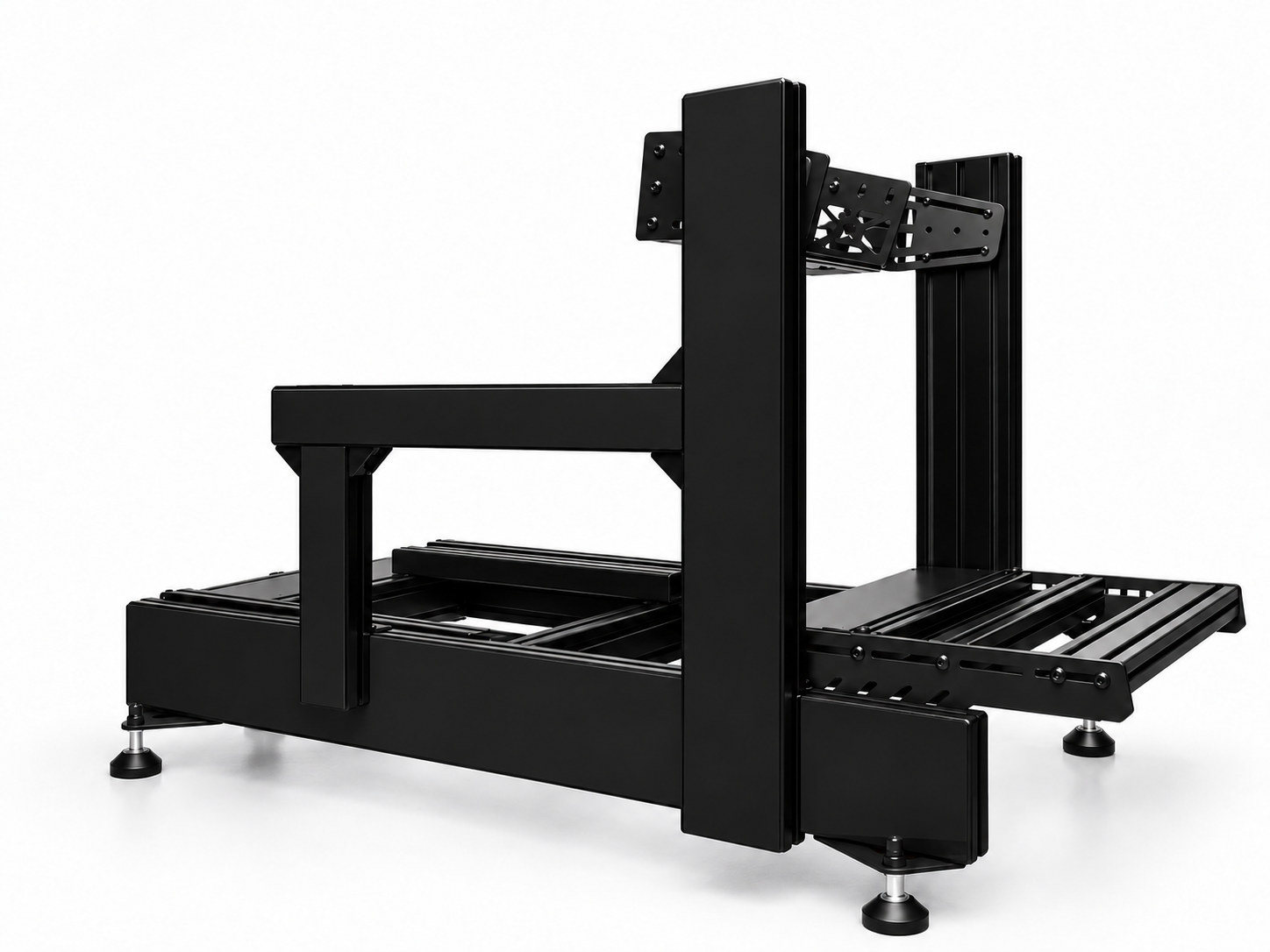

The closer your screen, the more ‘connected’ the car feels. Monitor placement is a geometry problem: distance sets FOV, height sets comfort, and wheelbase position sets how close you can get. Here’s how to choose a layout that feels natural.
Good news: most “feel” problems aren’t settings—they’re flex, seating position, or screen placement. Fix those and your lap times usually follow.
Forget ‘perfect’ screenshots — this is about comfort and confidence on track. We’ll start with real-world measurements and finish with small in-sim tweaks.
In two minutes
- Behind-the-wheel placement can improve FOV and depth cues.
- Over-the-wheel placement can be easier if the wheelbase blocks the screen.
- Your eyes lead your hands — vision setup changes everything.
- Small alignment errors create big ‘wrong car’ feelings.
- FOV and monitor distance are a package deal.
- Rig-mounted vs freestanding is about vibration, not looks.
Why rigidity changes everything
A good monitor setup reduces mental load. You stop guessing speed and distance, and you start driving by reference points. That’s why FOV, distance and alignment matter so much.
Checklist
- How deep is your wheelbase and how far does the rim sit forward?
- Can you position the monitor without hitting hands at full lock?
- Adjustment needs: height, tilt, rotation, and side screen angle.
- Screen size and aspect ratio (27/32 triples, ultrawide, or single).
- VESA pattern (75/100/200/400) and monitor weight.
- How close you can place the screens without hitting the wheelbase.
- GPU outputs (DisplayPort/HDMI) and refresh rate targets.
Setup recipe
- Set seat and wheel first, then bring the screen as close as comfort allows.
- Align eye height with the horizon line and avoid neck tilt.
- Set FOV using measured distance, then fine-tune for comfort.
- Lock everything down and re-check after a week of driving.
- Set seat and wheel position first (don’t chase FOV on a moving target).
- Place the centre screen so the horizon sits naturally at eye height.
Rig notes
Don’t tune FOV around a temporary seating position. Lock ergonomics first, then place screens. That order prevents endless rework.
Relevant SimXPro options
- GT - RS Single monitor mount — An integrated single monitor mount designed around the GT‑RS cockpit.
- Single screen stand tiltable - VESA 100/200 — A freestanding single monitor stand with wide VESA support and tilt.
- GT - RS GT Sim Racing Cockpit — A rigid GT-style aluminium profile cockpit with a strong upgrade path.
Avoid these mistakes
- Setting the screen too high ‘because it looks right’ on photos.
- Sitting far back and using a huge FOV to compensate.
- Ignoring bezel correction and wondering why corners feel weird.
- Setting FOV by ‘feel’ without measuring distance.
- Mounting triples to a flimsy stand and chasing shaking screens.
- Running the centre screen too high and looking ‘up’ at apexes.
FAQ
Is it bad if the wheelbase blocks part of the screen?
Not necessarily. Many people prefer the screen close even if the base hides a small part of the dash. The key is comfort and consistent sight lines.
Should monitors be attached to the rig?
Integrated mounts move with the cockpit and can be very solid. Freestanding stands can isolate vibration and make positioning easier in some rooms.
Do I need high refresh rate?
Higher refresh can reduce blur and help with small steering corrections, but stability, FOV and consistent FPS matter more than the number.
Is triple better than ultrawide?
Triples give more side vision and better depth for corner entry, but they take space and setup time. Ultrawide is simpler and cleaner.
Bottom line: Aim for calm confidence. Stable mounting, sensible settings and a comfortable position make everything else easier — and that’s usually where lap time comes from.
Want to go deeper? Browse our Sim Racing Guides for more buyer guides, compatibility checks and setup tips.

Share:
Surround sound vs stereo for sim racing: Is it worth it?
Wind simulation for sim racing: Diy vs kits and what you really feel