
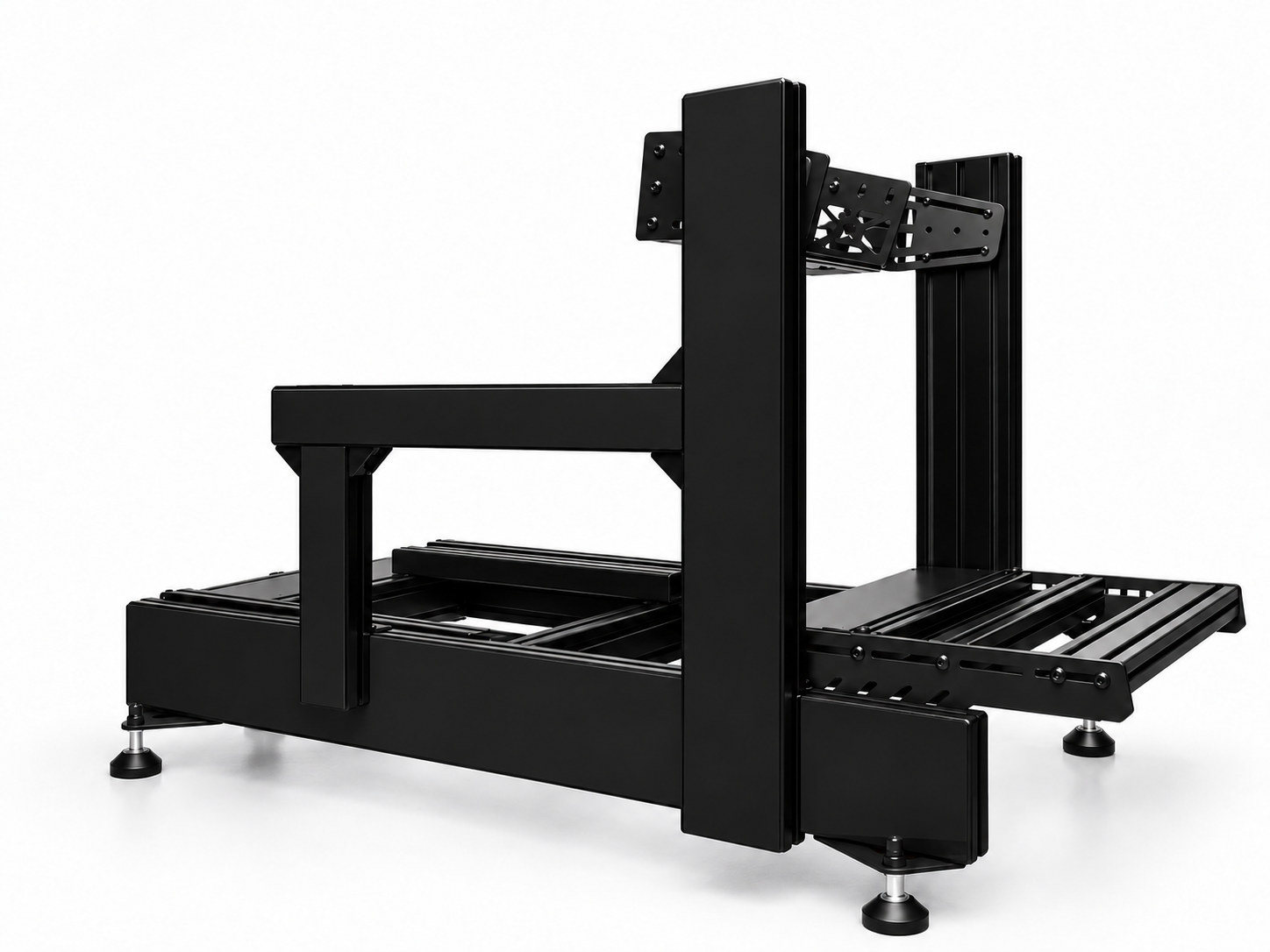

‘Heavy-duty’ sim rigs exist for one reason: once you step into high torque direct drive and very stiff pedals, any weakness in your cockpit becomes obvious.
The SimXPro XT120 vs TR160 comparison is really a comparison of rig classes—both aim to be the last cockpit you ever need.
What makes a rig ‘heavy-duty’ in practice?
- Rigidity under peak load: not just cruising torque, but the sharp spikes from kerbs, catches and corrections.
- Pedal deck strength: especially if you brake hard or run hydraulic pedals.
- Mounting flexibility: front mount, side mount, and clean cable management paths.
- Accessory readiness: shifter/handbrake mounts, button boxes, bass shakers, motion platforms.
The SimXPro XT120 approach
The XT120 is built around reinforced 120 mm profiles and ships as a pro-grade, zero-flex cockpit concept—aimed at serious racers who want stiffness, strength and adjustability.
- Product page: SimXPro XT120 cockpit
- Includes a Universal Front Wheel Mount and an extended shifter mount (useful if you run sequential + handbrake, or want clean ergonomics).
How to choose between heavy-duty rigs
1) Your wheelbase now—and next
If you’re moving up in torque, prioritise a cockpit that supports the mounting method you want (front mount is popular for high-end DD). If you’re not sure yet, choose a rig that can adapt.
2) Your pedal stiffness and driving style
Hard brakers expose flex. If you trail-brake aggressively or run very stiff elastomers/springs, pedal deck rigidity should be non-negotiable.
3) Your monitor plan
Triples add weight and leverage. Decide early whether you want an integrated mount or a separate stand to isolate vibration.
- Freestanding option: SimXPro heavy triple screen stand
Buy once: the real goal
If you’re shopping this category, you’re probably past ‘starter rig’ thinking. The goal is a cockpit that disappears—no movement, no noise, no compromises. Then all you’re left with is driving.
Choose the rig that fits your space and your upgrade path, and you’ll feel the benefits every single lap.

Share:
SimXPro vs trak racer rig: A practical buyer’s guide for aluminium profile cockpits
Test Drive Unlimited Solar Crown vs taxi life: Comfort setup for long sessions