

Two racing games can look similar — until you try to drive them back to back. The driving style changes how you sit, how you brake, and even how useful triples or a handbrake really are.
How these games differ (and why your rig cares)
- Test Drive Unlimited Solar Crown: Long sessions and comfort. A relaxed seat and clean monitor position matter most.
- Taxi Life: A City Driving Simulator: Long sessions and comfort. A relaxed seat and clean monitor position matter most.
The “one rig for both” rule
If you want one setup that covers both games, prioritise adjustability first (seat slider + pedal reach), then rigidity (wheel + pedal mounts), then your screen setup.
Wheelbase, pedals and controller choice (and why your cockpit matters)
Test Drive Unlimited Solar Crown, Taxi Life: A City Driving Simulator will run on anything from an entry-level gear-driven wheel to a 20+ Nm direct drive wheelbase. The key is matching the cockpit to the forces you’re generating.
- Entry wheels (Logitech G29/G923, Thrustmaster T248/T300) work best when the wheel mount doesn’t bounce or flex.
- Mid-range direct drive (Fanatec CSL DD, Moza R9/R12, Asetek La Prima) benefits from a rigid 8020 cockpit so the force feedback stays clean.
- High-end direct drive (Simucube 2, Fanatec DD1/DD2, Asetek Invicta) really wants a stiff chassis and a strong pedal deck — otherwise you feel flex instead of detail.
- If you use a load-cell brake, cockpit stiffness often improves lap time more than upgrading wheel torque.
Cockpit choice: the part that makes everything else feel better
Open-world driving and “chill” racers don’t need the stiffest cockpit on earth. What they do need is comfort, easy entry/exit, and a wheel position that doesn’t change between sessions.
Rig picks from SimXPro
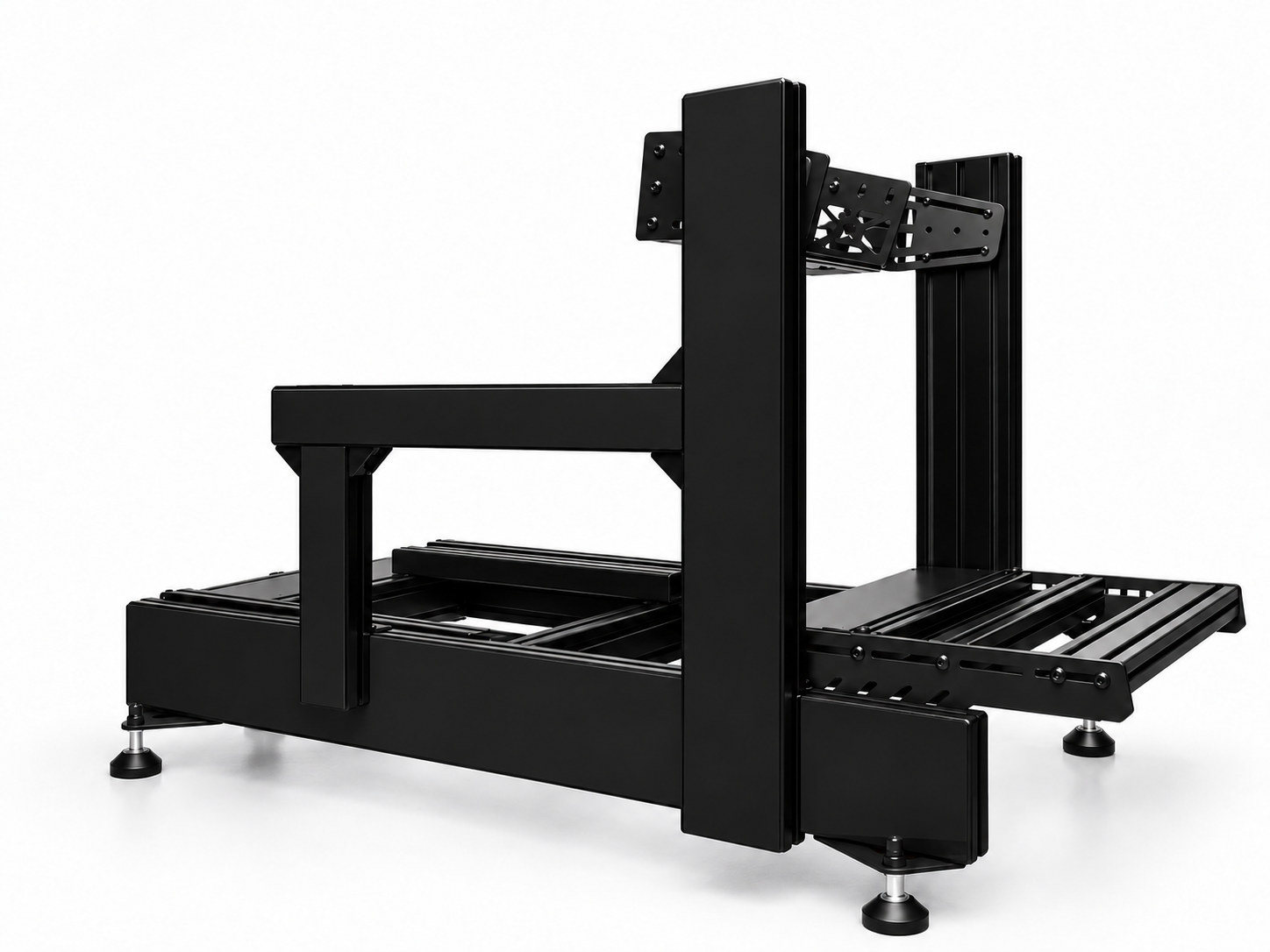
- GT - RS GT Sim Racing Cockpit – A comfortable, clean cockpit style that’s great for cruising and “just jump in and drive.”
- R80 GT Sim Racing Cockpit – A compact way to get off the desk and into a real seated driving position.
- X80 GT Sim Racing Cockpit – If you also play sims, this is the versatile step-up option.
Seat setup: your “driving position” is a performance setting
Comfort is the feature here. If you’re cruising or doing long sessions, a seat that supports your lower back (and allows small posture changes) is a big quality-of-life upgrade.
- Use a seat slider if more than one person drives — sharing a rig should take seconds, not tools.
- Avoid an overly “locked in” bucket if you prefer relaxed sessions.
- Match monitor height so you’re not craning your neck forward.
Seat picks that pair well with this style of game
- Basic Leather Reclining Seat + Slider – Comfort-first: great for long sessions, open-world driving, and sharing the rig with others.
- Torq GT Seat – More locked-in support if you want a sportier feel.
Monitor setup: the fastest “feel” upgrade after a solid rig
For relaxed driving and manager-style games, comfort and clarity matter most. A clean single-monitor setup is often the best balance for a living-room or desk-adjacent rig.
Monitor stand options
- Single screen stand tiltable - VESA 100/200 – A single screen setup is often perfect for living-room or desk-adjacent rigs.
- Single integrated monitor mount 75/100 VESA – An integrated single mount for a clean cockpit look.
In-game settings worth checking (before you blame your hardware)
These settings take 5–10 minutes and usually fix 80% of the “something feels off” complaints:
- Calibrate your wheel and pedals.
- Reduce deadzones and avoid extreme sensitivity.
- Set a stable camera and keep your horizon consistent.
- Tune force feedback for detail, not just strength.
Quick checklist before your first serious session
- Calibrate wheel rotation and pedal travel in-game (do this once, then stop chasing it).
- Set your seat distance so you can fully press the brake without locking your knee.
- Bring the monitor closer than you think, then lower it slightly so your eyes look at the horizon naturally.
- Do 10 minutes of slow laps to build muscle memory before pushing for a hotlap.
A simple SimXPro build that works (and how to upgrade it)
- Cockpit: GT - RS GT Sim Racing Cockpit
- Seat: Basic Leather Reclining Seat + Slider
- Monitor stand: Single screen stand tiltable - VESA 100/200
If you want a clear upgrade path: start by locking in your posture (seat + pedals), then upgrade rigidity (cockpit), then expand your view (monitor setup).

Share:
Test Drive Unlimited Solar Crown setup guide: A comfort first open world rig
Test Drive Unlimited Solar Crown setup guide: A comfort first open world rig