
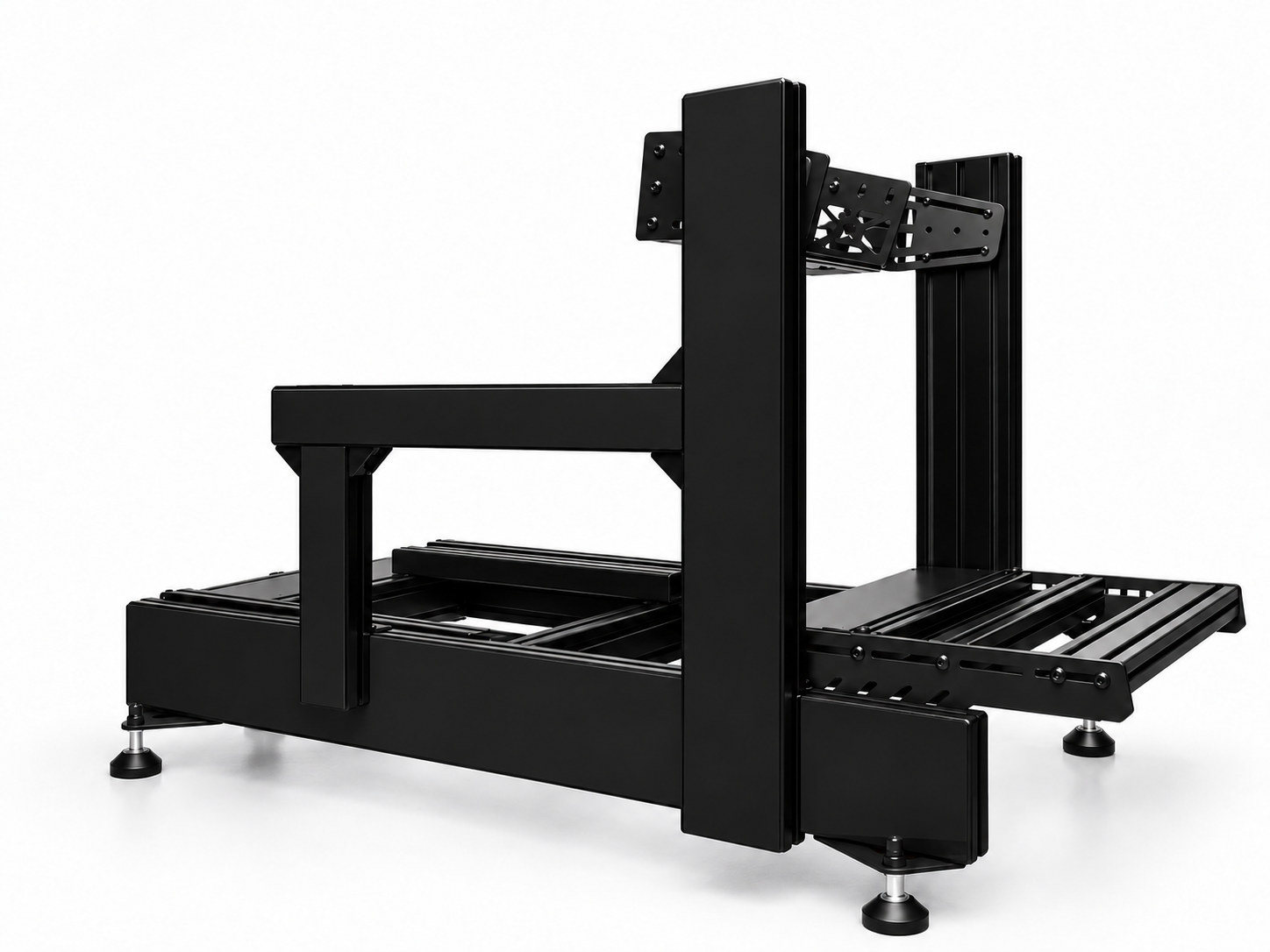

Triples are only as good as your stand’s rigidity. A triple monitor stand needs to hold alignment under vibration and over time. This guide explains when a lighter stand is sufficient, when to go heavy-duty, and how to set either one up for clean FOV and minimal wobble.
Quick note: if you’re planning to upgrade wheelbase torque or go to stiff load-cell/hydraulic pedals, prioritize rigidity first—everything else feels better on a solid foundation.
A great rig is the one you stop noticing — because nothing flexes, nothing rattles, and your position stays the same every session.
Quick overview
- Choose based on monitor weight and leverage, not just screen size.
- More rigidity means less re-adjusting after every hard session.
- Small adjustability details matter more than they sound.
- Stiffness and ergonomics are the real performance features.
- A cockpit isn’t just a frame — it’s the foundation of feel.
- Rig choice determines how far you can upgrade later.
What matters in practice
If your cockpit doesn’t move, your learning accelerates. The car feels more consistent, your braking becomes repeatable, and you can focus on technique instead of hardware quirks.
Before you buy: checklist
- Total screen weight and VESA pattern for each monitor.
- How much vibration you generate (DD torque, kerb strikes, haptics).
- Monitor mounting approach (integrated vs freestanding).
- Accessory mounts: shifter, handbrake, button box, trays.
- Wheelbase mounting options (bottom / side / front).
- Pedal deck stiffness and adjustability for load cell/hydraulic sets.
- Seat mounting range for different driver heights.
Step by step setup
- Level and lock the centre screen first, then match side screens.
- Re-check fasteners after a week; stands settle slightly after use.
- Set seat position and pedal distance first.
- Add wheelbase and lock in steering height/tilt.
- Finish with displays, cable management and peripherals.
- Plan your final ‘endgame’ hardware, then work backwards.
Hardware notes
Plan your cockpit around how you drive. A few smart choices (monitor strategy, pedal mounting, accessory positions) can save you hours of rebuilding later.
Relevant SimXPro options
- HEAVY Triple screen setup VESA 100 - 200 — A freestanding triple monitor stand for heavier screens and less shake.
- Light Triple screen setup VESA 75 - 100 — A lighter freestanding triple stand for smaller screens and simpler setups.
- 2x Triple - Quad connector bracket
Common pitfalls
- Buying the lightest option for heavy monitors and chasing wobble forever.
- Skipping cable strain relief and pulling screens out of alignment.
- Skipping accessories you’ll add later (and forcing a rebuild).
- Placing monitors first and then redesigning the cockpit position.
- Not leaving service loops for cables near moving parts.
- Overbuilding in one area and underbuilding the pedal mount.
Questions people ask
Can a triple stand work for quad later?
Often yes with the right extensions or connectors. Plan your upgrade path so you don’t replace the entire stand later.
What’s the best first accessory?
Usually a solid pedal solution (stiffer deck/plate) or a monitor mount that improves visibility — both help consistency immediately.
Can I start simple and upgrade later?
Yes — that’s the advantage of modular profile rigs. Plan mounting points and cable paths early so upgrades bolt on cleanly.
Do I need an integrated monitor mount?
Not always. Integrated mounts look clean and move as one unit. Freestanding stands can be easier to position and isolate vibration.
Bottom line: The best upgrade is the one that makes your inputs consistent. Build a solid baseline, then refine in small steps.
Want to go deeper? Browse our Sim Racing Guides for more buyer guides, compatibility checks and setup tips.
Related guides
- Getting started in sim racing: Choose your first wheel, pedals and cockpit
- Aluminium profile vs tubular sim rigs: Which should you choose?
- Curved vs flat monitors for triple setups: What actually works in sim racing
- Triple monitor alignment checklist: Fix tilt, height differences and perspective issues
- Best triple monitor stand for sim racing
- How to align triple monitors for sim racing
- Monitor stand stability with motion platform
- Integrated monitor mount vs freestanding stand
- Single monitor distance and FOV for sim racing
- Ultrawide vs triple monitors for sim racing FOV

Share:
SimXPro GT RS vs sim lab gt1 evo: Which gt cockpit makes more sense?
SimXPro r160 vs xt160: Choosing a heavy duty rig for high torque and stiff pedals