

Trail braking is where most lap time is hiding. Not because it looks fancy, but because it solves two problems at once: it slows the car and helps it rotate into the corner.
If you’ve ever felt like the car refuses to turn unless you oversteer it with the wheel, trail braking is usually the missing piece.
What trail braking actually is (in one sentence)
You brake hard in a straight line, then gradually release the brake as you turn in—keeping a small amount of brake pressure into the early corner to help the front tyres bite.
The simplest drill to learn it
- Step 1: pick one corner with a clear braking marker (a board, kerb change, or shadow).
- Step 2: do 5 laps braking in a straight line only. Focus on consistency, not speed.
- Step 3: on the next 5 laps, keep 5–10% brake pressure as you start turning in (just enough to feel the nose stay planted).
- Step 4: gradually reduce that ‘trail’ amount until the car rotates without understeer.
- Step 5: repeat. The goal is a smooth brake release, not a perfect apex.
What you should feel when it’s working
- Front-end bite. The car responds earlier to steering input.
- Less mid-corner understeer. You need less steering angle to hold the line.
- Cleaner throttle pickup. The car is pointed earlier, so you can accelerate sooner.
Common mistakes (and fixes)
- Holding too much brake too long: the car won’t rotate; it just pushes. Fix: reduce brake pressure earlier, keep it smooth.
- Releasing the brake too suddenly: weight transfers back, front grip disappears. Fix: focus on a slow, controlled release.
- Overturning the wheel: you scrub the tyres and heat them. Fix: aim for less steering angle when trail braking is right.
- Ignoring pedal feel: trail braking is pressure control. Fix: calibrate your brake and practise repeatable pressure.
The hardware truth: stability helps technique
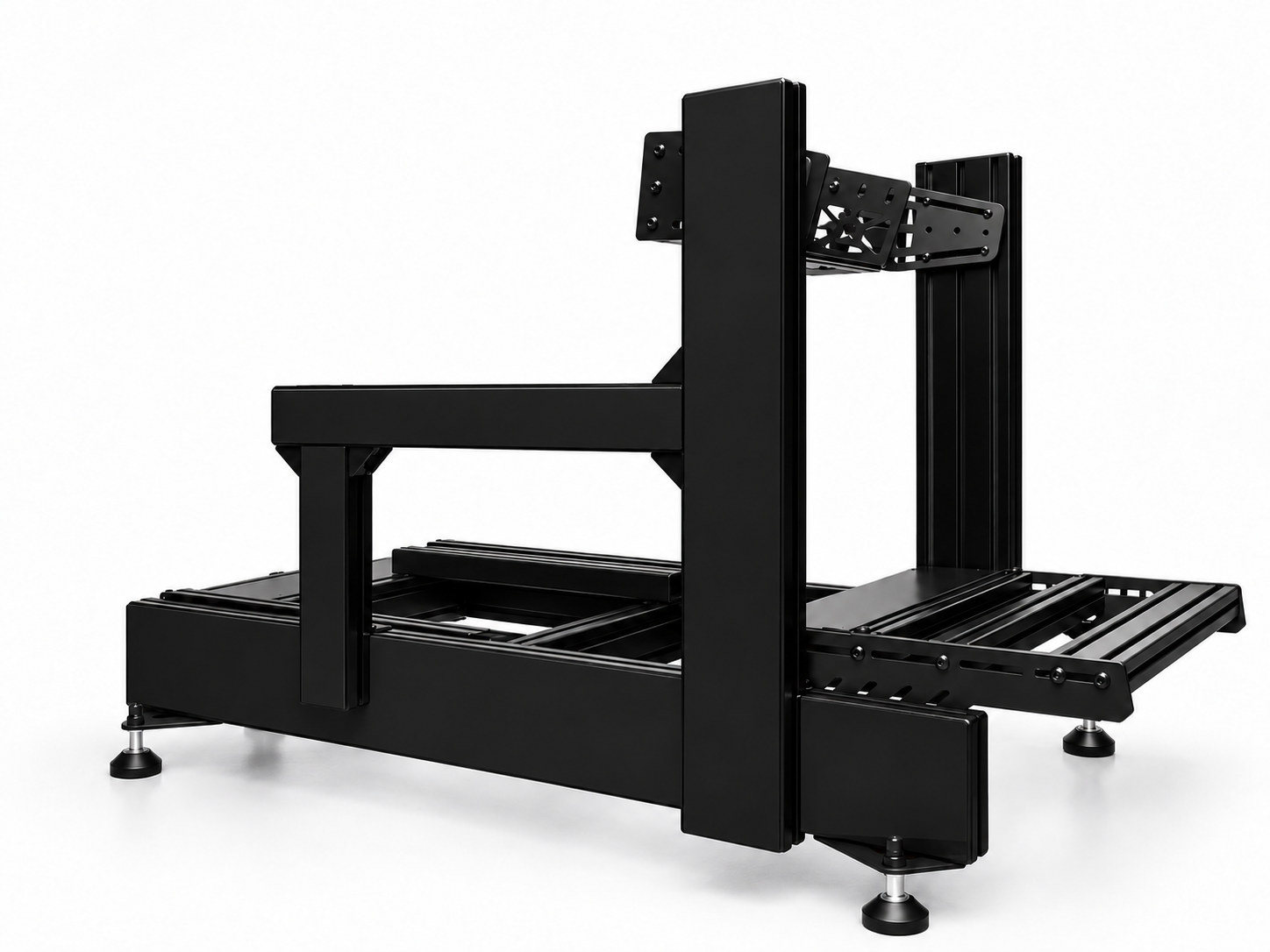
Trail braking is easier when your braking platform is stable. Load cell pedals, a rigid pedal deck, and a seat that doesn’t move under pressure all make the technique more repeatable.
One last tip: trail braking is a skill you build slowly. Chase smoothness first. The speed follows.

Share:
Sim racing racecraft tips: Overtakes, defense and safer side by side driving
Steering technique in sim racing: Smooth inputs, micro corrections and better feel