

Braking points aren’t where you ‘feel like’ braking — they’re where you can repeat. Consistent braking is built on reference points you can see every lap. This guide shows how to choose markers, what to do when they disappear in traffic, and how to move them safely as you get faster.
Think of this as skill-building, not theory. Try the steps, test them on one corner, and keep what improves repeatability.
At a glance
- Pick markers you can see in peripheral vision, not just straight ahead.
- Move braking points in small steps — one car length at a time.
- Most lap time is lost in entry and early throttle, not mid-corner.
- Your goal is to make the car boring — then make it fast.
- A stable rig helps you learn because feedback stays consistent.
- Speed comes from repeatable inputs, not heroic corners.
Why this matters
Lap time is mostly the result of a few repeatable behaviours: where you brake, how smoothly you release, how early you commit to throttle, and how calm your hands are. Fixing one corner with a clear process often unlocks speed everywhere else.
Checklist before you change anything
- Your view setup: can you see boards, kerbs and shadows clearly?
- A stable brake pedal mount so pressure matches memory every lap.
- Use a delta or reference lap to guide practice.
- Focus on one skill per session (brake release, apex, exits).
- Drive at 95% until you can repeat it.
- Review one replay/telemetry metric after each session.
- Pick one car/track combo and stick with it for a week.
A practical step by step
- Choose a ‘safe’ marker, then refine by reducing brake time gradually.
- Use replay to confirm: are you braking early, late, or inconsistently?
- Start slow enough to hit every apex and brake marker.
- Add speed on entry first, then on exit, not both at once.
- Reduce steering rate (turn the wheel slower, earlier).
- Squeeze throttle earlier, but more gently.
Rig and hardware notes
If you’re working on technique, remove variables. Any flex in the pedals or wheel mount turns good feedback into noise. The same goes for monitors: if your view shifts, your reference points shift with it.
Relevant SimXPro options
- Single screen stand tiltable - VESA 100/200 — A freestanding single monitor stand with wide VESA support and tilt.
- HEAVY Triple screen setup VESA 100 - 200 — A freestanding triple monitor stand for heavier screens and less shake.
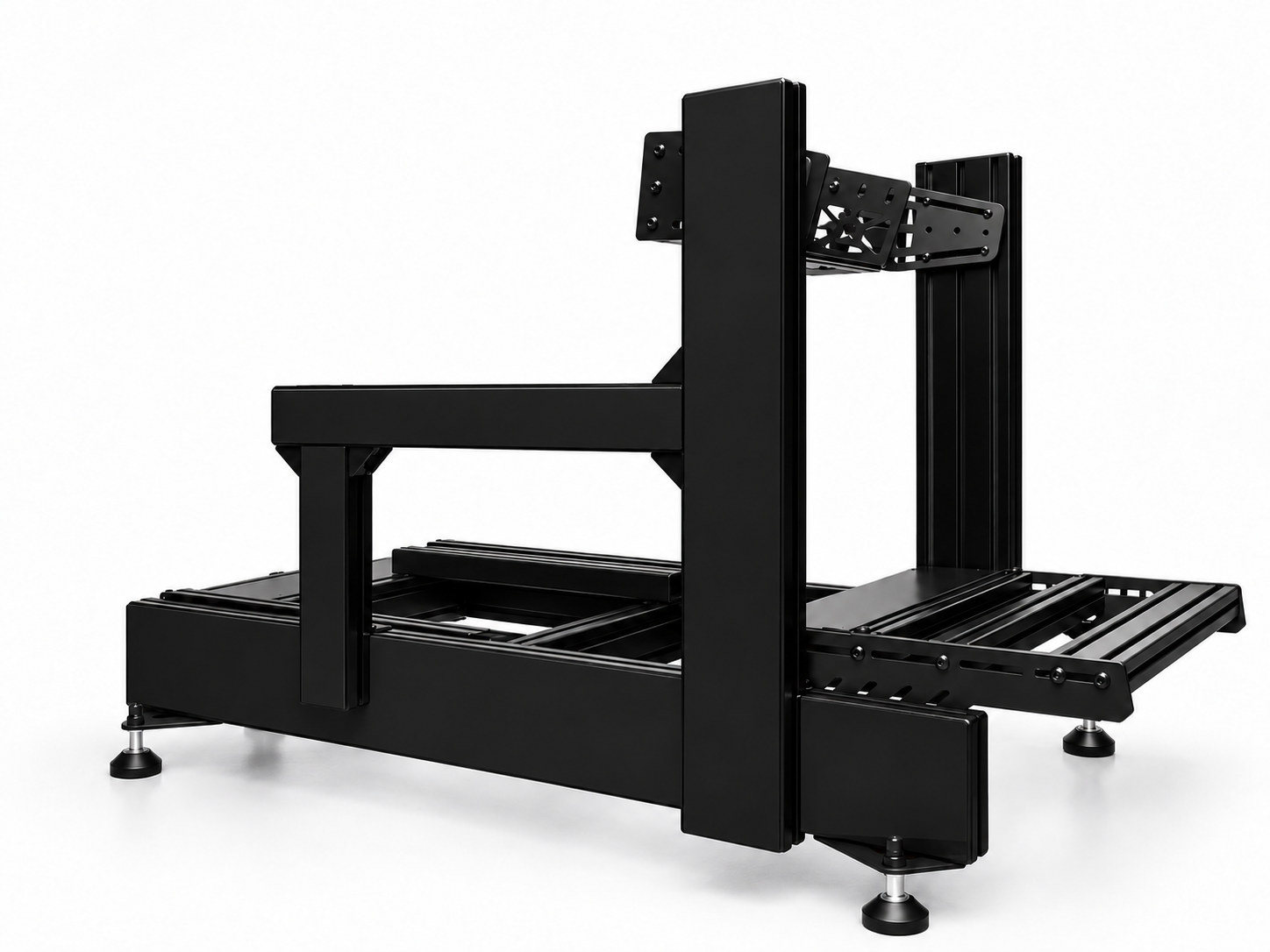
- GT - RS GT Sim Racing Cockpit — A rigid GT-style aluminium profile cockpit with a strong upgrade path.
Common mistakes to avoid
- Using a marker that gets blocked in traffic (like a small cone).
- Changing braking point and turn-in point at the same time.
- Trying to set a personal best every lap.
- Turning in too late and asking the tyres to do everything at once.
- Braking hard and then ‘coasting’ with no plan.
- Fixing understeer with more steering lock instead of better entry speed.
FAQ
What if the sim has no brake boards?
Use fixed objects: marshal posts, kerb changes, shadows, fencing seams. The rule is repeatability, not perfection.
Why am I fast sometimes but inconsistent?
Because your inputs change each lap. Slow down slightly and make your braking points and steering rate repeatable.
What should I practice first?
Braking and entry. A clean entry sets up the entire corner and makes throttle easier.
Do hardware upgrades make you faster?
They can, but only if they improve consistency. A stable rig and good pedals are usually the biggest ‘useable’ upgrades.
Bottom line: Keep it repeatable. If you can set it once and forget it — whether it’s torque, FOV, pedals or posture — you’ll drive more relaxed, learn faster and enjoy longer sessions.
Want to go deeper? Browse our Sim Racing Guides for more buyer guides, compatibility checks and setup tips.

Share:
Brake bias explained: The adjustment that can make your car ‘come alive’
Force feedback clipping explained: How to set gain without losing detail