
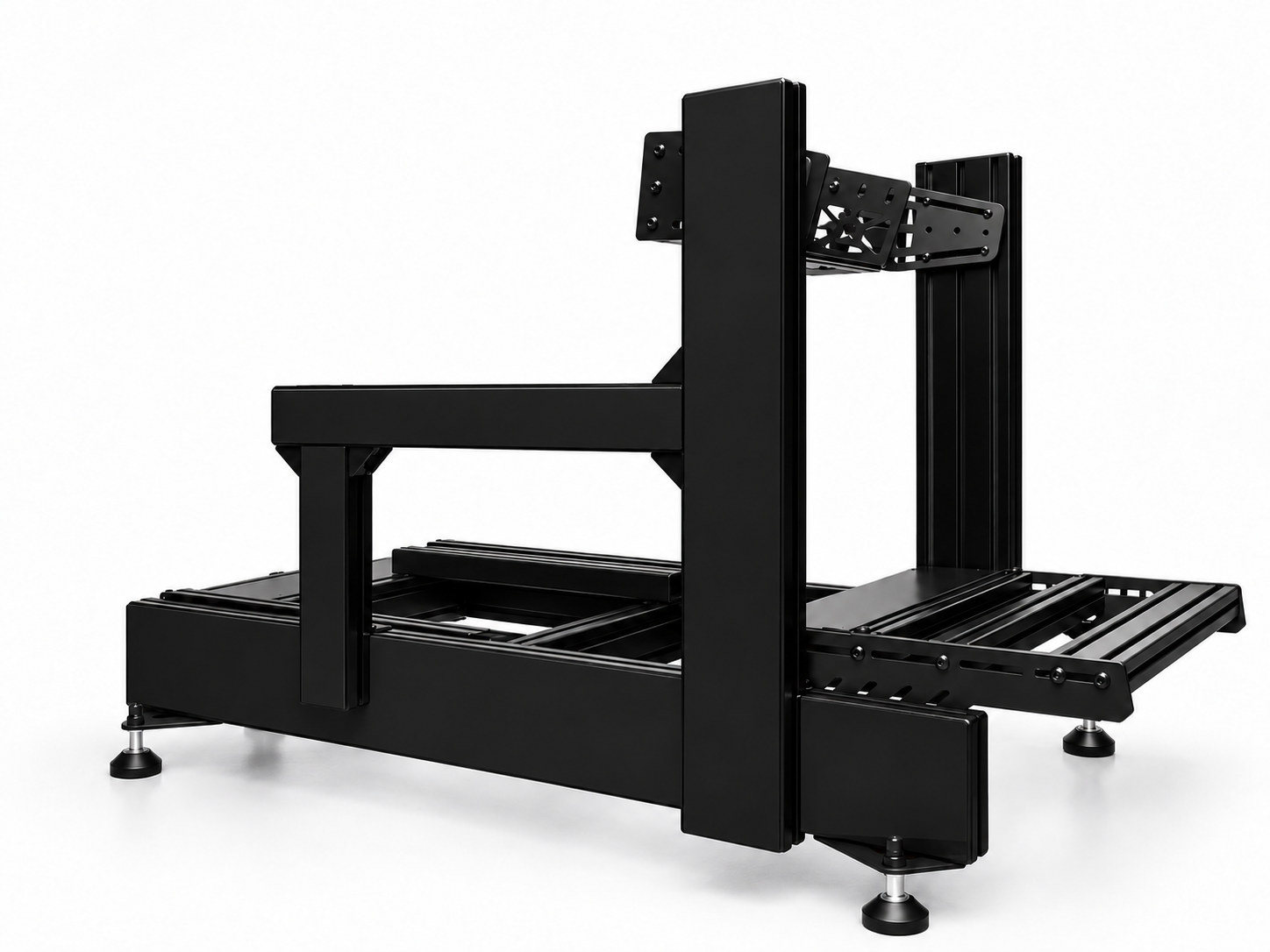

Inverted pedals look ‘race car’ — but do they drive better? Inverted pedal sets can improve comfort and heel support for some drivers, but they also demand more space and sturdier mounting. Here’s how to decide (and how to mount them properly).
Rule of thumb: buy the rig you can grow into. A cockpit that stays rigid saves money (and frustration) when you upgrade later.
You don’t need ‘the best’ hardware — you need hardware that works together. This guide helps you build a balanced setup you can trust.
Key takeaways
- Inverted pedals can reduce ankle strain on long stints.
- Fitment and clearance are the hidden cost — measure first.
- Stability first: flex turns good hardware into guesswork.
- Buy for your upgrade path, not today’s impulse.
- Comfort is performance: posture affects braking and steering.
- Specs don’t drive the car — feel and fitment do.
The real difference
The ‘best’ hardware is the hardware you can use for long sessions without pain or inconsistency. Choose for stability and ergonomics first, then for raw specs.
Fitment checklist
- Heel support: do you struggle to keep a planted heel when braking?
- Space: do you have vertical clearance for an inverted assembly?
- Noise and vibration tolerance (apartment vs garage).
- Upgrade path: shifter/handbrake, triples/VR, haptics, motion.
- Your main sim titles (GT, F1, rally) and the controls you actually use.
- How you will mount everything (desk clamp, wheel deck, front mount, side mount).
- Room constraints: monitor distance, seat travel, and where cables can run.
Build plan
- Mock the position with blocks before drilling or bolting anything.
- Aim for a stable heel reference so braking becomes repeatable.
- Choose a cockpit/rig that won’t flex under that load.
- Add displays and peripherals once the core is stable.
- Dial in ergonomics and settings before chasing upgrades.
- Write down what you race most (GT, formula, rally, drifting).
Notes for upgrades
Balance beats extremes. A mid-range wheelbase on a rock-solid rig can feel better than a flagship wheelbase on a flexy mount.
Relevant SimXPro options
- Profile Pedal Deck 500 — A profile-based pedal deck for stiff load cell and hydraulic pedal sets.
- GT - RS GT Sim Racing Cockpit — A rigid GT-style aluminium profile cockpit with a strong upgrade path.
- R160 - Silver - Black — A wider, heavier-duty profile rig option for high-end hardware loads.
Mistakes that cost pace
- Choosing inverted pedals without checking pedal deck adjustability.
- Mounting too high and forcing your knees into an awkward angle.
- Buying for peak torque and running it at 30% because the rig flexes.
- Mounting a stiff brake on a soft pedal plate and blaming your technique.
- Going ‘all-in’ on one ecosystem without checking fitment and adapters.
- Ignoring ergonomics until pain forces you to stop driving.
Quick FAQ
Are inverted pedals more realistic?
They can be, but realism isn’t the only goal. Consistency and comfort matter more than matching a specific car’s layout.
Do I need a full cockpit?
If you’re on load cell/hydraulic brakes or a direct drive wheelbase, a cockpit becomes the ‘enabler’ that makes every other upgrade work.
Is more expensive always better?
Not automatically. The best upgrade is the one you can use consistently — a stable mount, good ergonomics and clean feel beat raw specs.
Should I upgrade wheelbase or pedals first?
If your pedals are basic, upgrading pedals usually improves lap time sooner. If you can’t mount them rigidly, upgrade the rig first.
Bottom line: The best upgrade is the one that makes your inputs consistent. Build a solid baseline, then refine in small steps.
Want to go deeper? Browse our Sim Racing Guides for more buyer guides, compatibility checks and setup tips.
Related guides
- SimXPro gt FIA seat: Fitment, FIA homologation and how to mount it on 8020 rigs
- Button boxes, dash displays and stream decks: A practical upgrade guide
- Side mount vs bottom mount seats: Fitment, height and comfort differences
- SimXPro XFR formula cockpit: Seating position, wheel angle and monitor setup

Share:
Haptic seat pads (hf8 etc): Worth it or better put into a rig?
iRacing beginner guide: What to buy, how to practice and how to progress