

Your steering wheel is a leverage tool, not just a button holder. Wheel rim size and shape change steering effort, precision and comfort. This guide explains the common rim types (GT, formula, round) and how to choose for your sims and your driving style.
You don’t need ‘the best’ hardware — you need hardware that works together. This guide helps you build a balanced setup you can trust.
At a glance
- Smaller rims feel quicker but can amplify twitchiness.
- Grip shape affects long-session comfort more than most people expect.
- Specs don’t drive the car — feel and fitment do.
- Stability first: flex turns good hardware into guesswork.
- Buy for your upgrade path, not today’s impulse.
- Comfort is performance: posture affects braking and steering.
Why this matters
The ‘best’ hardware is the hardware you can use for long sessions without pain or inconsistency. Choose for stability and ergonomics first, then for raw specs.
Checklist before you change anything
- Your typical steering range (rally vs GT vs formula).
- Hand comfort: do you use gloves, and do you get numbness?
- How you will mount everything (desk clamp, wheel deck, front mount, side mount).
- Room constraints: monitor distance, seat travel, and where cables can run.
- Noise and vibration tolerance (apartment vs garage).
- Upgrade path: shifter/handbrake, triples/VR, haptics, motion.
- Your main sim titles (GT, F1, rally) and the controls you actually use.
A practical step by step
- Choose rim type based on cars you drive most, not what looks cool.
- Set wheel distance so you can steer without locking your elbows.
- Write down what you race most (GT, formula, rally, drifting).
- Pick the control that sets the foundation (wheelbase torque or pedal stiffness).
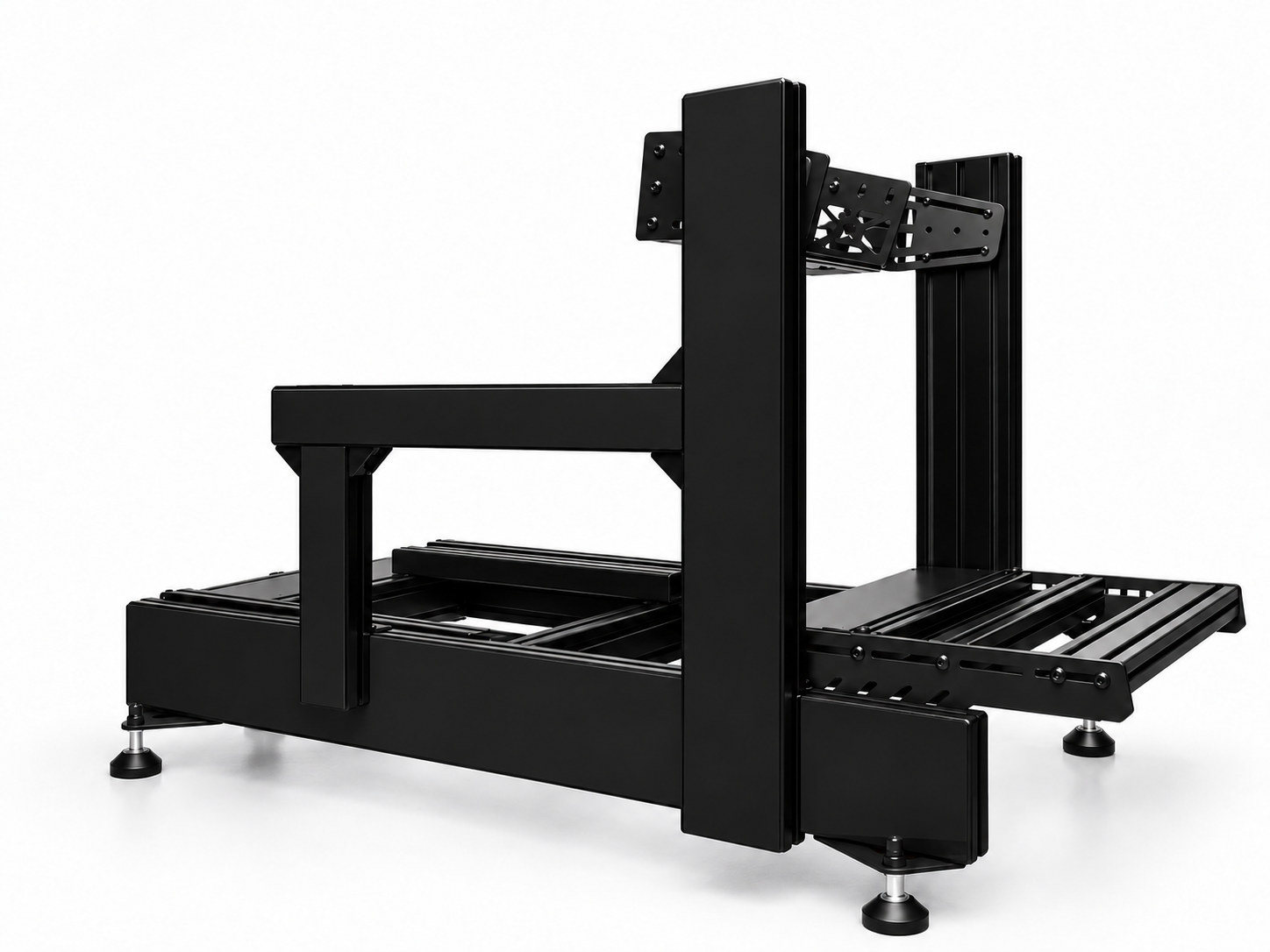
- Choose a cockpit/rig that won’t flex under that load.
- Add displays and peripherals once the core is stable.
Rig and hardware notes
Balance beats extremes. A mid-range wheelbase on a rock-solid rig can feel better than a flagship wheelbase on a flexy mount.
Relevant SimXPro options
- GT - RS GT Sim Racing Cockpit — A rigid GT-style aluminium profile cockpit with a strong upgrade path.
- FR Formula Sim Racing Cockpit — A formula-position cockpit designed to get your pedals high and your hips low.
- Torq GT Seat — A supportive seat focused on posture and long-session comfort.
Common mistakes to avoid
- Running a tiny formula rim for rally and fighting rotation.
- Mounting the wheel too high and overloading your shoulders.
- Ignoring ergonomics until pain forces you to stop driving.
- Buying for peak torque and running it at 30% because the rig flexes.
- Mounting a stiff brake on a soft pedal plate and blaming your technique.
- Going ‘all-in’ on one ecosystem without checking fitment and adapters.
FAQ
Does rim size change FFB strength?
It changes leverage. A larger rim can feel lighter at the hands; a smaller rim can feel more direct but also more demanding.
Do I need a full cockpit?
If you’re on load cell/hydraulic brakes or a direct drive wheelbase, a cockpit becomes the ‘enabler’ that makes every other upgrade work.
Is more expensive always better?
Not automatically. The best upgrade is the one you can use consistently — a stable mount, good ergonomics and clean feel beat raw specs.
Should I upgrade wheelbase or pedals first?
If your pedals are basic, upgrading pedals usually improves lap time sooner. If you can’t mount them rigidly, upgrade the rig first.
Bottom line: The best upgrade is the one that makes your inputs consistent. Build a solid baseline, then refine in small steps.
Want to go deeper? Browse our Sim Racing Guides for more buyer guides, compatibility checks and setup tips.

Share:
Team communication in endurance: Short phrases that prevent big mistakes
Direct Drive front mount vs side mount: Which is better and why?