
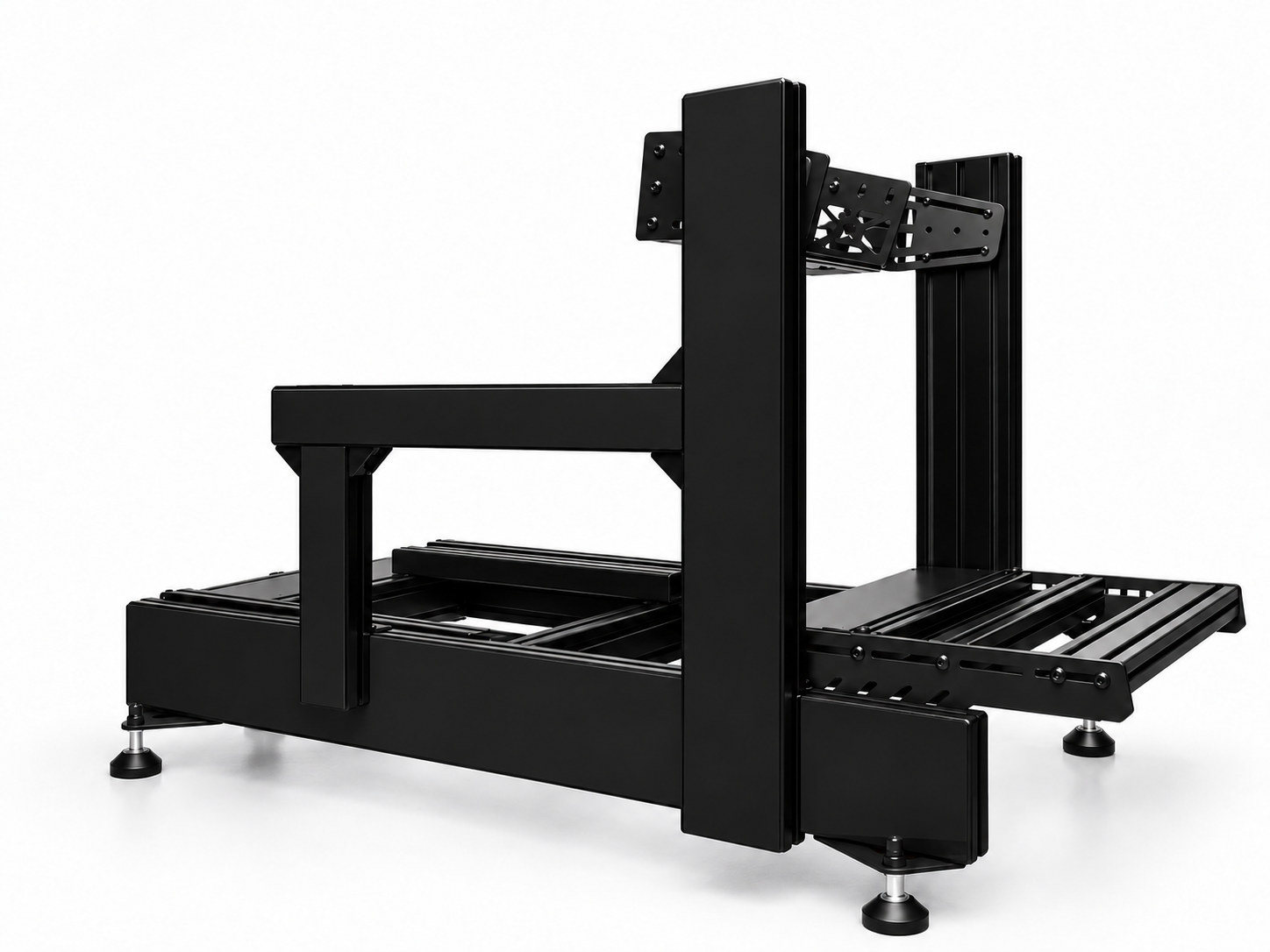

You can have a serious sim rig without becoming ‘that neighbour’. Direct drive wheels, stiff pedals and haptics can transmit noise through floors and walls. This guide shows practical fixes that reduce vibration and keep your setup enjoyable for everyone.
Most reliability problems come down to mounting, power, and strain relief. Solve those and the software side becomes far less dramatic.
At a glance
- Most noise is vibration transfer — isolate the rig from the floor.
- Brake thumps are often louder than wheelbase noise.
- Future-proofing is cheaper than rebuilding later.
- Most ‘hardware problems’ are mounting, power or USB problems.
- A clean rig isn’t aesthetic — it’s reliability.
- Vibration travels. If you can hear it, your neighbours can too.
Why this matters
A reliable rig lets you practice properly. When you’re not worried about disconnects or rattles, you can focus on technique and consistency.
Checklist before you change anything
- What’s the loudest part: pedals, wheelbase, shifter, or shakers?
- What floor are you on (wood, concrete, carpet)?
- A powered USB hub for high-draw devices.
- Cable paths that don’t move with pedals or seat sliders.
- Strain relief on every cable near a moving joint.
- A plan for peripherals you’ll add later (shifter, shakers, button box).
- One stable power source with surge protection.
A practical step by step
- Reduce vibration at the source: tighten mounts and remove rattles.
- Add isolation under the rig and keep haptics volume sensible.
- Start with the simplest setup and add devices one at a time.
- Separate power cables from USB/signal cables where possible.
- Use a powered hub mounted to the rig (not dangling).
- Add cable strain relief so connectors aren’t taking the load.
Rig and hardware notes
A tidy rig is easier to diagnose. When cables are labelled and routed cleanly, problems become obvious — and fixes become quick.
Relevant SimXPro options
- GT - RS GT Sim Racing Cockpit — A rigid GT-style aluminium profile cockpit with a strong upgrade path.
- 4x Adjustable Feet Mounting Bracket
- 4x Standard Rubber Feet — A simple way to add grip and reduce vibration transfer from your rig to the floor.
Common mistakes to avoid
- Adding more power (torque/haptics) before fixing rattles and isolation.
- Using hard wheels/casters on a resonant floor without damping.
- Mounting shakers without isolating the rig from the floor.
- Chasing software fixes for what is actually a hardware/power issue.
- Running everything from one unpowered USB hub.
- Letting cables rub against aluminium profile edges and pinch points.
FAQ
Will a heavier rig be quieter?
Sometimes it helps by reducing resonance, but isolation matters more. Even heavy rigs can transmit vibration if they’re coupled directly to the floor.
Is cable management worth it?
Yes. It prevents random failures, makes upgrades easier, and keeps your cockpit safer (no snagged pedals or cables in seat rails).
Why do USB devices disconnect mid-race?
Most often it’s power draw, a bad hub, cable strain, or interference. Simplify, add a powered hub, and secure cables so nothing moves.
Do bass shakers make the rig louder?
They can. Isolation feet, lower volume and smarter placement help. Rigid frames transmit vibration efficiently — great for feel, risky for neighbours.
Bottom line: The best upgrade is the one that makes your inputs consistent. Build a solid baseline, then refine in small steps.
Want to go deeper? Browse our Sim Racing Guides for more buyer guides, compatibility checks and setup tips.

Share:
Bezel correction for triple monitors: How to set it up without breaking your FOV
Expeditions: A MudRunner Game setup guide, Off road driving, shifter placement and seat support