
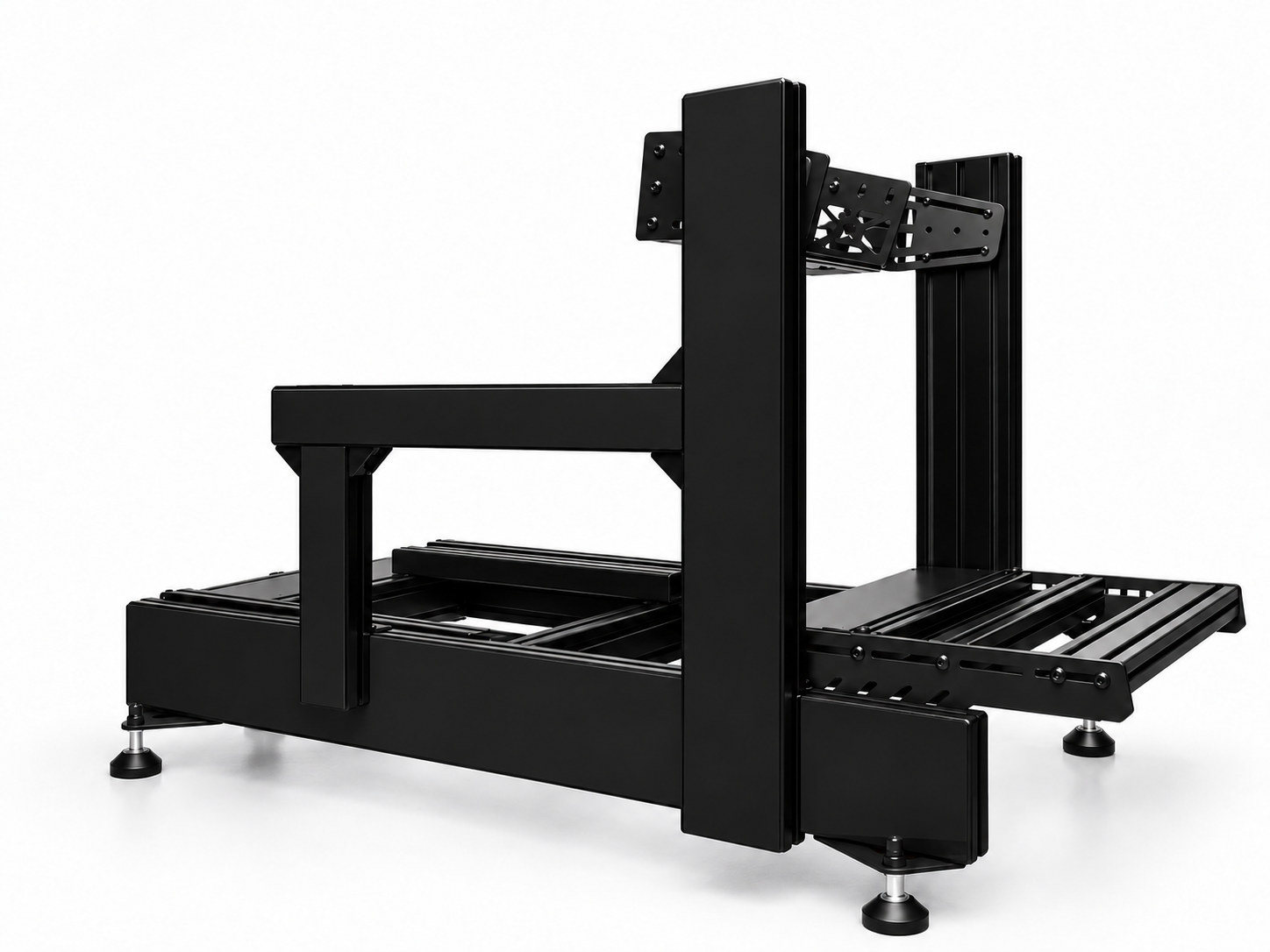

Haptics can add ‘seat-of-the-pants’ feel without buying motion. Bass shakers (transducers) add vibration that represents kerbs, engine, road texture and wheel slip. The trick is placement and restraint: more vibration isn’t always more information.
Good news: most issues have boring fixes. Start simple, change one thing at a time, and you’ll usually end up with a rig that’s both cleaner and more reliable.
At a glance
- One well-placed shaker can teach you more than four poorly tuned ones.
- Isolation matters: otherwise you’re vibrating the floor, not the car.
- A clean rig isn’t aesthetic — it’s reliability.
- Vibration travels. If you can hear it, your neighbours can too.
- Future-proofing is cheaper than rebuilding later.
- Most ‘hardware problems’ are mounting, power or USB problems.
Why this matters
Reliability is pace. If your wheel disconnects, your pedals drift, or your rig rattles, you’ll drive tense and you’ll avoid pushing. A tidy, well-powered, well-mounted setup is not just nicer to look at — it’s easier to trust.
Checklist before you change anything
- Where can you mount a shaker solidly (seat, pedal tray, chassis)?
- How sensitive is your room to noise and vibration transfer?
- A plan for peripherals you’ll add later (shifter, shakers, button box).
- One stable power source with surge protection.
- A powered USB hub for high-draw devices.
- Cable paths that don’t move with pedals or seat sliders.
- Strain relief on every cable near a moving joint.
A practical step by step
- Start with one shaker and one effect (kerbs or engine) and refine.
- Add effects only when you can clearly identify what they mean.
- Add cable strain relief so connectors aren’t taking the load.
- Test after a long session — heat and vibration reveal weak links.
- Start with the simplest setup and add devices one at a time.
- Separate power cables from USB/signal cables where possible.
Rig and hardware notes
When troubleshooting, aim for predictable behaviour. Secure mounting points, power stability and strain relief solve most problems. Once the rig is reliable, you can add complexity (haptics, motion, extra screens) with confidence.
Relevant SimXPro options
- GT - RS GT Sim Racing Cockpit — A rigid GT-style aluminium profile cockpit with a strong upgrade path.
- XT120 GT Sim Racing Cockpit — A reinforced profile rig built for high-torque wheelbases and stiff pedals.
- Torq GT Seat — A supportive seat focused on posture and long-session comfort.
Common mistakes to avoid
- Turning every effect to max and losing useful information.
- Mounting shakers to weak points that rattle instead of transmit cleanly.
- Running everything from one unpowered USB hub.
- Letting cables rub against aluminium profile edges and pinch points.
- Mounting shakers without isolating the rig from the floor.
- Chasing software fixes for what is actually a hardware/power issue.
FAQ
Do bass shakers make you faster?
They can help consistency by improving cues (wheel slip, kerb strikes), but only if the signals are clean and not just ‘noise’.
Why do USB devices disconnect mid-race?
Most often it’s power draw, a bad hub, cable strain, or interference. Simplify, add a powered hub, and secure cables so nothing moves.
Do bass shakers make the rig louder?
They can. Isolation feet, lower volume and smarter placement help. Rigid frames transmit vibration efficiently — great for feel, risky for neighbours.
Is cable management worth it?
Yes. It prevents random failures, makes upgrades easier, and keeps your cockpit safer (no snagged pedals or cables in seat rails).
Bottom line: Keep it repeatable. If you can set it once and forget it — whether it’s torque, FOV, pedals or posture — you’ll drive more relaxed, learn faster and enjoy longer sessions.
Want to go deeper? Browse our Sim Racing Guides for more buyer guides, compatibility checks and setup tips.
Related guides
- Building a quiet sim rig for apartment living: Noise, vibration and practical fixes
- Cable management for future upgrades: Motion, shakers, dashboards and button boxes
- Vr motion sickness in sim racing: 12 fixes that make vr usable
- USB dropouts in sim racing: Hubs, power, EMI and how to fix random disconnects

Share:
Assetto Corsa beginner setup: FOV, force feedback and must know settings
Bezel correction for triple monitors: How to set it up without breaking your FOV