
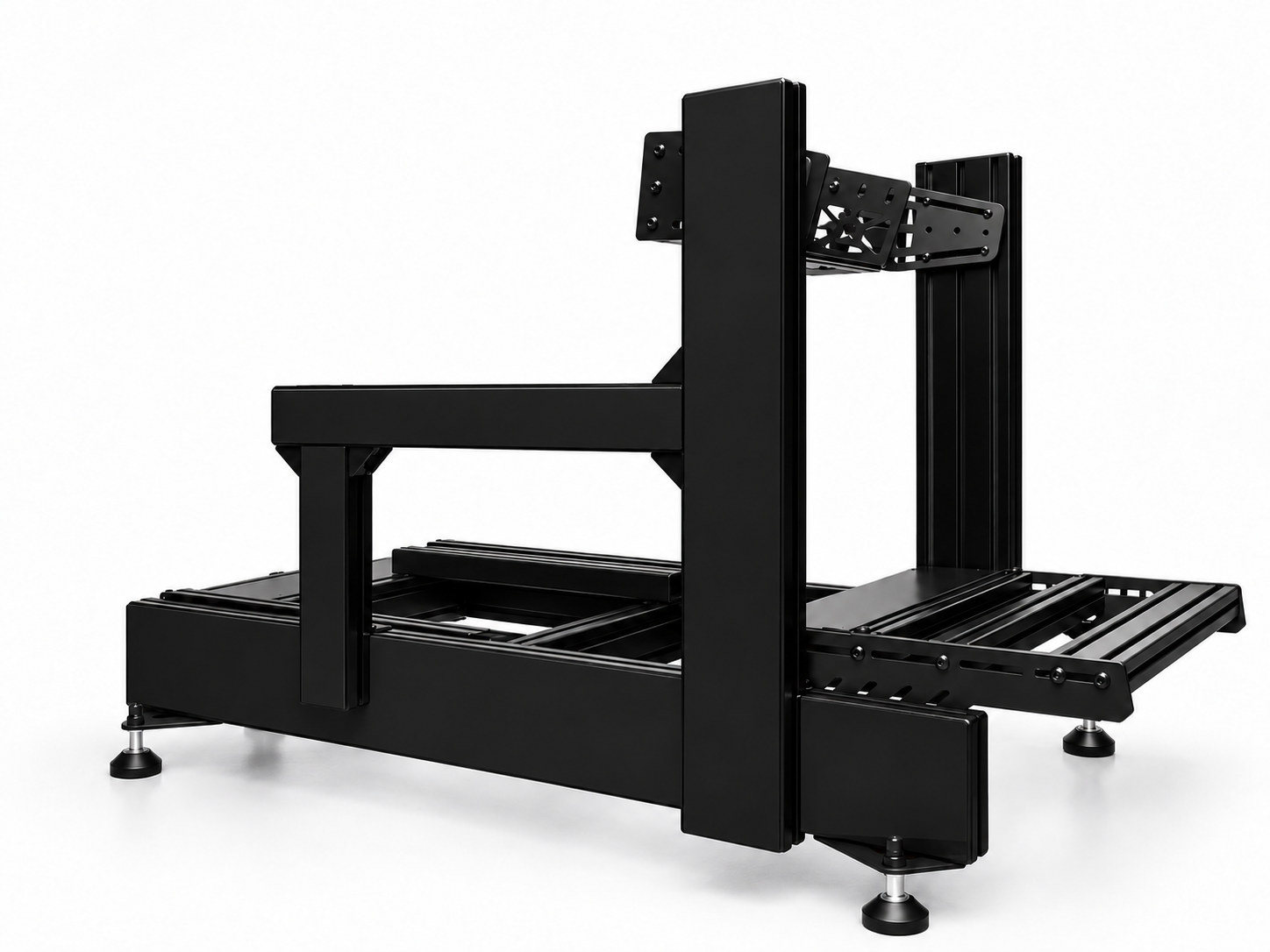

Simracehardware ontwikkelt zich snel. Wheelbases worden krachtiger. Pedalen worden stijver. Monitoren worden groter. En de meeste sim racers houden niet voor altijd exact dezelfde setup.
Daarom ontwerpen we vanuit één principe:
Je cockpit moet upgrades ondersteunen, niet afstraffen.
Wat betekent 'compatibiliteit' nu echt?
Compatibiliteit betekent niet: 'kan het op de een of andere manier worden vastgeschroefd?'
Het is:
- Kun je je wheelbase monteren zonder zomaar gaten te boren?
- Kun je van pedalen wisselen zonder je rijpositie te verliezen?
- Kun je van stoel wisselen zonder de rig opnieuw op te bouwen?
- Kun je monitoren upgraden zonder dat ze gaan wiebelen?
Onze aanpak: bouwen rond standaarden
Waar mogelijk richten we ons op bevestigingsstandaarden en flexibele verstelpunten:
- Stoelen: standaard zijbevestigingen (bijv. universele set voor stoelbevestiging)
- Monitoren: bevestiging op basis van VESA (met duidelijke uitleg over patronen en afstanden)
- Wheelbases: bevestigingsoplossingen voor populaire ecosystemen, zonder dat je de hele rig hoeft te vervangen
Gok niet — gebruik de gidsen
Om compatibiliteit eenvoudiger te maken, breiden we onze gidsen uit met praktische uitleg en checklists. Een paar goede startpunten:
- Wiel-ecosystemen uitgelegd: wat betekent 'compatibel' nu echt?
- VESA-patronen uitgelegd (75×75, 100×100, 200×200, 400×400)
- Stoelrails vs. vaste bevestiging vs. zijbeugels
Op zoek naar een toekomstbestendige basis?
Als je een platform wilt dat relevant blijft terwijl je je setup uitbreidt, begin dan met een stijf chassis en kies accessoires die passen bij je langetermijnplannen:
- GT‑RS — veelzijdige GT-basis
- XFR — gericht op een formulezitpositie
- GT‑PRO — strak ontwerp met gesloten profielen, gemaakt voor hoge belasting

Delen:
Ons verhaal, deel 7: 2023, uitgroeien tot een vertrouwd merk, één build tegelijk
SimXPro x Alpine op Masters Expo 2025: simracen naar RAI Amsterdam brengen