Logitech G29 vs G923 is a classic “should I upgrade or should I spend the money elsewhere?” question. The truth is: either wheel can be fun and useful — but the biggest improvements for most drivers come from stability, pedals and posture, not from swapping one entry wheel for another.
What’s the real difference you’ll feel?
- Consistency: both can teach you smooth inputs and repeatable laps.
- Refinement: newer models can feel a bit more modern in features and tuning (depending on version and platform).
- Ceiling: once you want more detail and stronger feedback, the next step is usually direct drive — not another gear-driven wheel.
Upgrade path: where your money usually goes further
- Stabilise the setup: stop desk flex and pedal slide first.
- Improve braking: pedals are where lap time comes from.
- Then consider the wheelbase: upgrade when you can clearly feel what you’re missing.
If you haven’t built a cockpit yet, start with: Wheel Stand vs Cockpit: When It’s Time to Stop Clamping and Start Racing.
When does upgrading to the G923 make sense?
- You’re replacing a worn wheel and want a fresh setup with warranty and modern support.
- You’ve already fixed the foundation (rig stability + pedals) and you still want a small step up before going DD.
The foundation upgrade that makes both wheels feel better
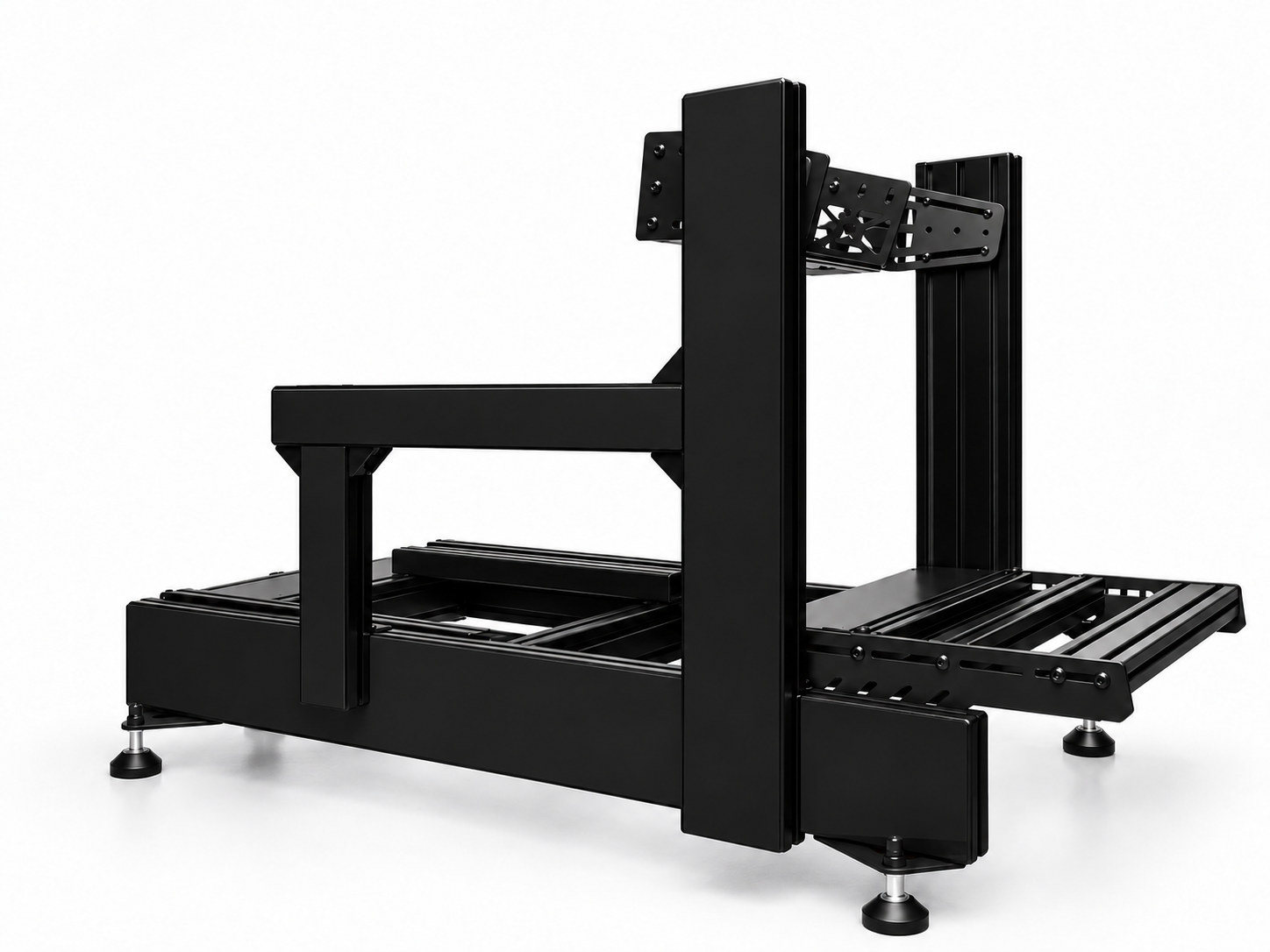
A rigid cockpit turns an entry wheel into a more consistent training tool. Even a compact aluminium profile rig like the SimXPro R80 removes most of the flex problems. If you already plan to go direct drive later, jumping to a cockpit like the SimXPro GT-RS can save you money long-term.
Bottom line: G29 vs G923 isn’t a life-or-death decision. Fix the rig, fix the pedals, then decide whether you still want to upgrade the wheel — or leap straight to direct drive.

Share:
How much Direct Drive torque do you really need? 5nm vs 8nm vs 12nm vs 20nm
Monitor setup by racing game: Single vs triple vs ultrawide (when each wins)