

ACC feels ‘hard’ until your basics are set — then it becomes addictive. Assetto Corsa Competizione rewards smooth braking and precise vision. This guide focuses on the essentials: view/FOV, calibration, tyre pressure basics and a step by step plan to get faster without getting lost in setup menus.
Rule of thumb: buy the rig you can grow into. A cockpit that stays rigid saves money (and frustration) when you upgrade later.
The fastest way to improve is to build a stable baseline. Calibrate correctly, avoid extreme settings, and only change one variable per test run.
Key takeaways
- Correct view settings improve confidence more than any car setup tweak.
- Tyre pressure basics matter — but consistency matters more.
- View settings affect confidence and consistency.
- Start with a baseline, then change one thing at a time.
- Most sims feel ‘wrong’ until calibration is correct.
- FFB isn’t a single slider — it’s a set of trade-offs.
The real difference
Calibration and view settings are ‘silent upgrades’. When rotation, pedals and force feedback are correct, you stop fighting the car and start learning from it. A clean baseline also makes it easier to diagnose problems — because you know what changed.
Fitment checklist
- Wheel rotation matched so steering lock feels natural.
- Stable pedals and seat so braking pressure is repeatable.
- Wheel rotation matched in driver and in-game.
- Pedals calibrated so 100% is reachable comfortably.
- FFB gain set to avoid clipping in heavy corners.
- View/FOV set for your monitor distance.
- Frame rate stable (consistency beats peak FPS).
Build plan
- Start with a safe baseline setup and only change one thing at a time.
- Use a consistent fuel load and conditions when comparing laps.
- Run a 10-lap test and only adjust one setting per run.
- Update firmware and drivers first (then stop changing things).
- Set wheel rotation and confirm in-game steering matches.
- Calibrate pedals and set a sensible brake gamma/curve if needed.
Notes for upgrades
If you’re tuning settings, keep hardware stable. Flex changes feel, and feel changes settings. Lock down mounts first, then adjust gain and filters.
Relevant SimXPro options
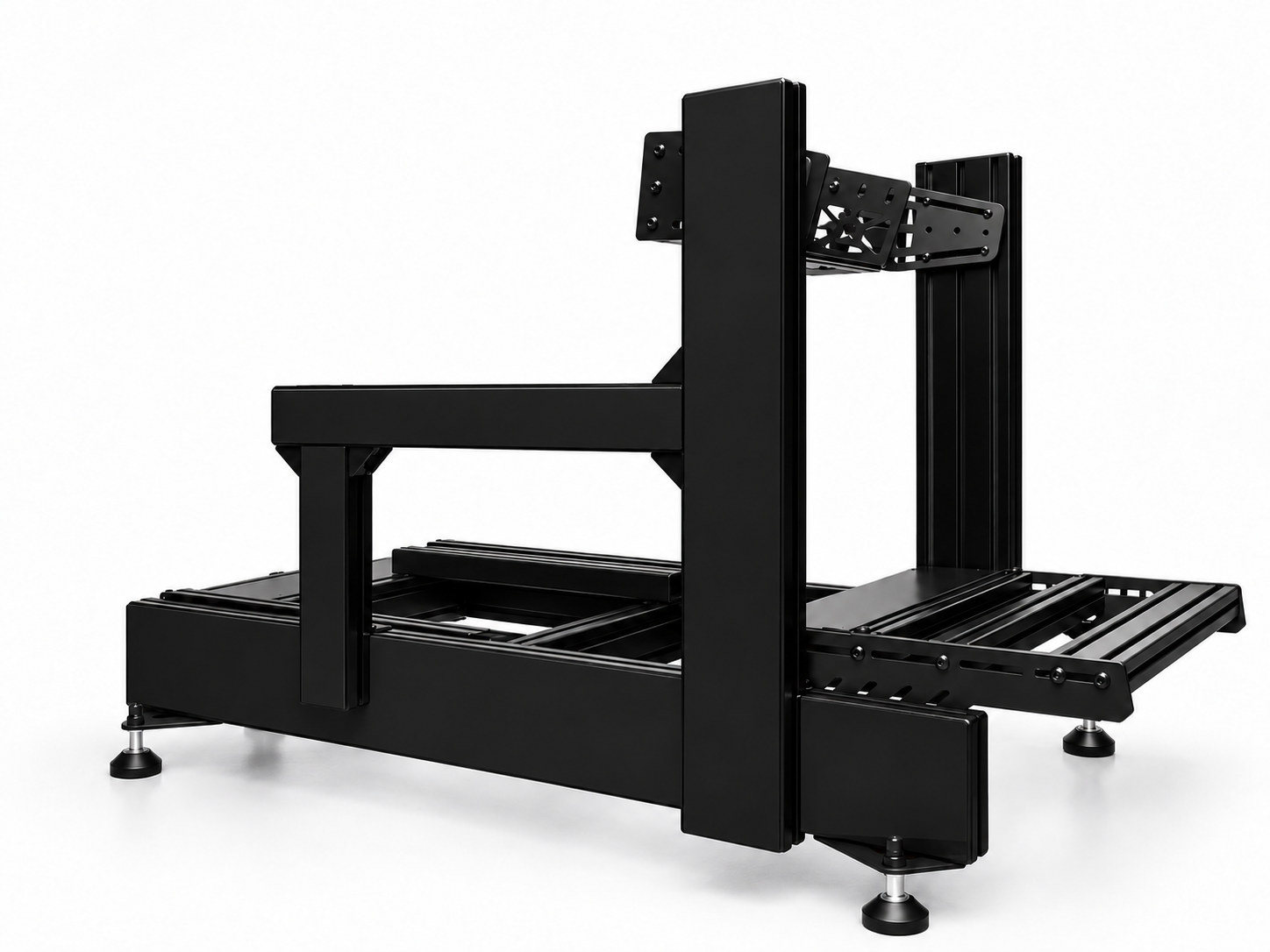
- GT - RS GT Sim Racing Cockpit — A rigid GT-style aluminium profile cockpit with a strong upgrade path.
- Profile Pedal Deck 500 — A profile-based pedal deck for stiff load cell and hydraulic pedal sets.
- HEAVY Triple screen setup VESA 100 - 200 — A freestanding triple monitor stand for heavier screens and less shake.
Mistakes that cost pace
- Copying ‘alien’ setups without matching your driving style and hardware.
- Chasing tyre pressures while braking points are inconsistent.
- Using too much FFB gain and losing detail to clipping.
- Running mismatched wheel rotation and fighting muscle memory.
- Copying ‘pro’ settings without matching hardware and FOV.
- Changing 10 settings at once and not knowing what helped.
Quick FAQ
Should I learn ACC with assists on?
Use assists to learn lines and braking points, then reduce them gradually. The goal is confidence and repeatability, not suffering.
Should I copy settings from faster drivers?
Use them as a starting point, not gospel. Different wheels, FOV and rigs change what feels right.
How do I know if I’m clipping?
If heavy corners feel flat and you lose road texture, you likely have too much gain. Reduce until detail returns.
Does a rig matter for sim settings?
Yes. If your wheelbase or pedals move under load, calibration and feel become inconsistent.
Bottom line: Keep it repeatable. If you can set it once and forget it — whether it’s torque, FOV, pedals or posture — you’ll drive more relaxed, learn faster and enjoy longer sessions.
Want to go deeper? Browse our Sim Racing Guides for more buyer guides, compatibility checks and setup tips.

Share:
Abs and traction control in sim racing: How to use assists to learn, not to hide mistakes
Automobilista 2 wheel settings: A solid baseline for feel and control